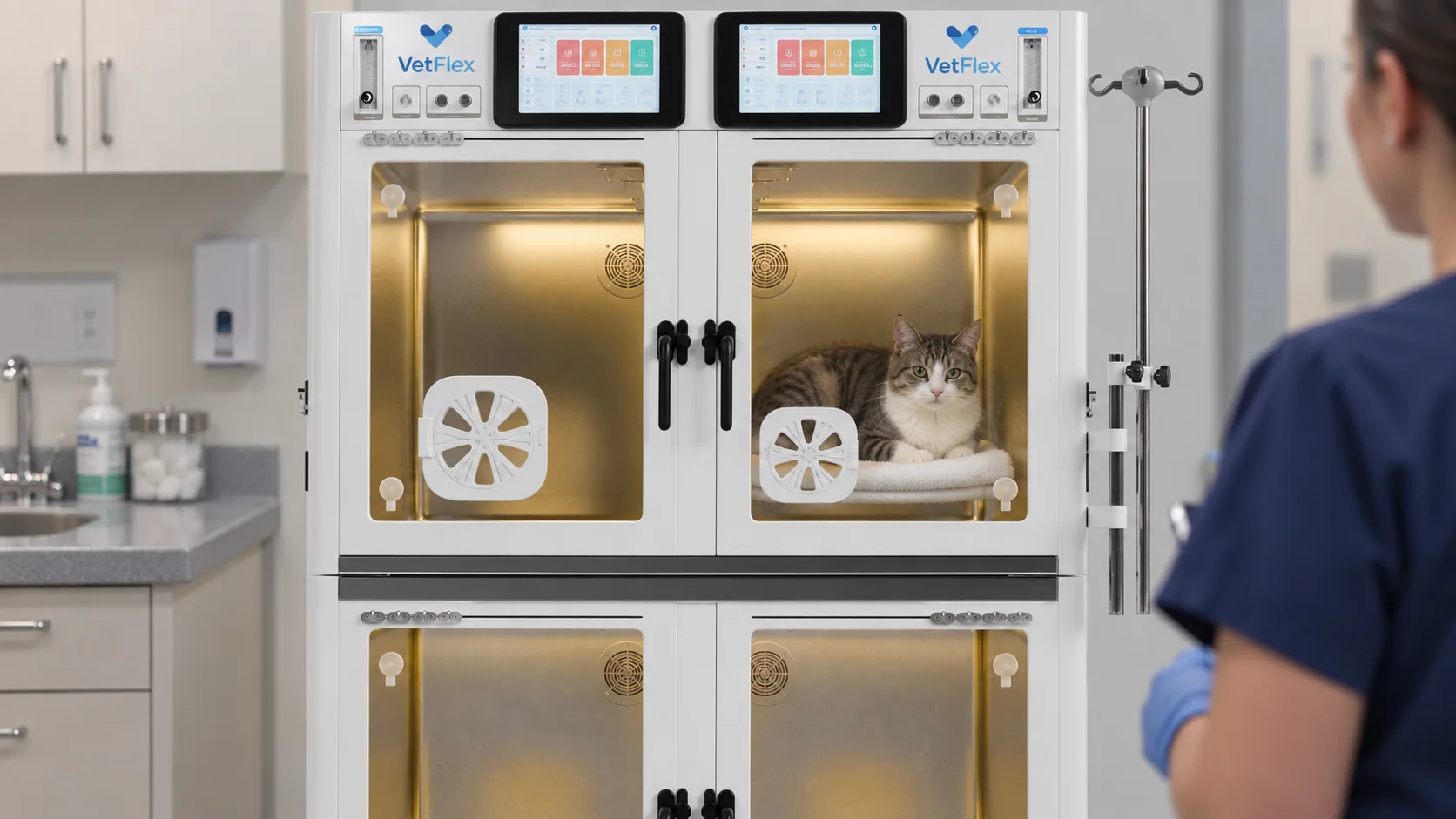
Veterinary ICU Cages: Oxygen Cage Selection, Setup and Care
A hospital guide to veterinary ICU cages, from oxygen cage selection and patient fit to installation, observation and operating costs.
Compare the Pro, Pro Hybrid, Pro Duo and Pro Duo XL using published dimensions and controls. Clinical settings remain the veterinary team's responsibility.
Quick answer
Choose a veterinary ICU cage by patient fit, chamber controls and staff access.
Review oxygen supply, placement and cleaning before installation.
Key points
- Compare actual chamber dimensions, not guessed weight limits.
- Match independent oxygen spaces to hospital needs.
- Review oxygen and CO₂ control separately.
- Plan power, ventilation clearance and backup care.
- Train staff on observation, cleaning and service.
Last reviewed by VetFlex Clinical Education Team: March 13, 2026
Key Topics Covered
Soda lime-free CO2 management and airflow engineering
Insulated cage systems that reduce patient stress
Best practices for ICU system longevity and reliability
Recovery workflows and patient monitoring standards
Planning, financing, and installing ICU systems
Veterinary ICU cages: selection, operation and hospital planning
A veterinary ICU cage combines a patient enclosure with controlled oxygen delivery, CO₂ management and environmental controls. Hospital selection should consider these functions together. The cage's dimensions, observation access, independent spaces and cleaning workflow are as important as the oxygen source.
Start with the patient mix and intended procedures, then compare equipment features and operating requirements. The Veterinary Oxygen Cage Buying Guide is the single purchasing guide, while this hub connects the clinical, installation and maintenance reading used by the hospital team.
An oxygen kennel and a small animal oxygen cage are terms visitors may use for an enclosure providing oxygen support. For hospital purchasing, review the actual functions rather than relying on the label: controlled oxygen, active exchange of exhaled air, temperature regulation and usable patient space.
VetFlex equipment is sold to veterinary hospitals and clinics, not for pet owners to operate at home. Clinicians determine the treatment and observation plan, and equipment specifications should not be presented as a universal patient protocol.
Compare the published VetFlex ICU model specifications
| ICU model | Configuration | Internal L × W × H |
|---|---|---|
| VetFlex ICU Pro | One oxygen chamber | 24.4 × 42.0 × 23.9 inches |
| VetFlex ICU Pro Hybrid | One oxygen chamber plus recovery space | 24.4 × 42.0 × 23.9 inches, oxygen chamber |
| VetFlex ICU Pro Duo | Dual oxygen chambers, independent controls | 24.4 × 42.0 × 23.9 inches per chamber |
| VetFlex ICU Pro Duo XL | Dual larger oxygen chambers, independent controls | 28.0 × 47.9 × 28.3 inches per chamber |
Compare VetFlex ICU Pro, VetFlex ICU Pro Hybrid, VetFlex ICU Pro Duo, VetFlex ICU Pro Duo XL. The Pro is a single oxygen chamber, not the Pro Duo. The Hybrid combines an oxygen chamber with recovery space; it should not be described as two independently controlled oxygen chambers.
The Pro Duo provides dual oxygen chambers, and the XL adds larger internal dimensions. Match actual patient measurements, positioning and access requirements to these dimensions. The published specifications do not provide a patient weight limit, so do not select solely by a guessed kilogram or pound rating.
Placement, oxygen supply and backup planning
The published specification sheets list central oxygen, oxygen concentrator and tank compatibility. The compatible VetFlex concentrator supplies 10 LPM; the cage controls and external oxygen source are different parts of the system.
Confirm source capacity against the intended configuration and concurrent patient use with the clinical team. Check 110V/10A power, the 30 minute integrated UPS specification and 3 inches of ventilation clearance on all sides.
Backup capacity does not replace the hospital's outage and patient observation procedures.
Published ICU features include 304 stainless steel construction, a 10 inch touchscreen, real time CO₂ sensors, 60°F to 99°F temperature control, under 40 dB operation and a two year warranty subject to written terms.
For Duo configurations, controls are independent per chamber. Review cleaning access, seals and equipment operating instructions with staff. Ion air treatment does not replace physical cleaning and disinfection. Compare the specification sheet for the exact model rather than transferring every feature or dimension between configurations.
Operating cost is not the equipment purchase price
The existing cost guide models 1 unit over 5 years. Its default traditional operating total is $35,000, VetFlex is $3,500, and the estimated difference is $31,500. Annual traditional assumptions are $3,000 soda lime, $800 maintenance, $1,500 consumable related staff labor, $500 energy and $1,200 other consumables.
VetFlex models $200 annual maintenance and the same $500 energy, with $0 soda lime, consumable related labor and other consumables. These are editable operating assumptions, not a purchase quote or guaranteed savings.
Use ICU cost of ownership to change the inputs for your hospital. For equipment pricing, use the existing Request Pricing form below and describe the model, patient mix, room constraints and oxygen source.
Compare warranty coverage, service and maintenance alongside the purchase proposal. A single chamber can be an initial configuration, but confirm the supported expansion or upgrade path with VetFlex rather than assuming every additional chamber is an interchangeable attachment.
Patient use cases: canine and feline respiratory care
The published site describes oxygen cage use in respiratory distress, post surgical recovery, emergency medicine and specialty care. These are clinical use cases, not promises of a specific outcome. Teams should assess patient positioning, access and observation alongside the controllable environment.
The dogs and cats oxygen cage guide separates species and patient fit from the choice of single, hybrid or dual chamber configuration. Use actual patient dimensions instead of an inferred weight rating.
For breed specific clinical context, read brachycephalic dogs and oxygen cages. For feline cases, read feline respiratory distress in veterinary ICUs. Those articles address clinical subjects; the model table supplies equipment dimensions. The attending veterinary team remains responsible for deciding how the patient is supported, observed and treated, including when a different delivery method or intervention is needed.
How oxygen cages work and what the displays mean
Oxygen enters the enclosure from an external source while the equipment manages the chamber environment. VetFlex's AERAFLOW™ approach uses fresh air exchange for exhaled CO₂ rather than soda lime absorption.
The cage controls and the oxygen source serve different functions. A display of enclosure oxygen or CO₂ is not the same as a measurement of patient oxygenation. Staff should use it as part of the equipment and clinical observation plan rather than as a stand alone assessment of the patient's condition.
Read how a veterinary oxygen cage works for the published operational explanation and why soda lime free oxygen cages are used for the CO₂ management discussion. Compare ICU systems and AERAFLOW™ technology alongside those articles. Keep gas management, physical cleaning and any ion air treatment distinct; one function does not eliminate the need for the others.
Installation, staff preparation and routine maintenance
Facilities review should include external dimensions, access through the building, final placement, power and the oxygen supply. The published specification sheets list 110V/10A, locking casters and 3 inches of ventilation clearance on all sides.
Model specific dimensions and controls should be checked before committing the treatment room to a layout. A dual oxygen configuration needs a different operational plan from a hybrid oxygen and recovery configuration, even when their standard oxygen chamber dimensions are similar.
Use ICU onboarding, common ICU setup mistakes and ICU equipment maintenance best practices. Plan cleaning, disinfection, seal checks and service according to the equipment instructions; this hub does not create a new maintenance interval. The 30 minute integrated UPS specification is a limited backup feature. Staff still need the hospital's outage response, observation and escalation procedures for occupied cages.
Hospital experience, procurement and next steps
The Virginia Tech installation story describes a published institutional example. Use it for context about implementation, not as a guarantee that every hospital will see the same experience or outcome. A purchasing team can review the clinical requirements, the facilities constraints and the proposed service coverage together. Published warranty coverage is two years subject to written terms; confirm the exact terms, configuration and documentation in the proposal.
The current ICU solutions and individual product pages are the equipment buying destinations. Use their Request a Quote controls for a configuration proposal and review financing if relevant. For waste and operating assumptions, the sustainable veterinary practices guide links ICU soda lime elimination with the separate Natrle examination glove topic. Keep purchase pricing, editable operating estimates and published clinical specifications separate in the decision.
Essential Reading

ICU System Overview
Modern veterinary ICU cage systems and clinical benefits
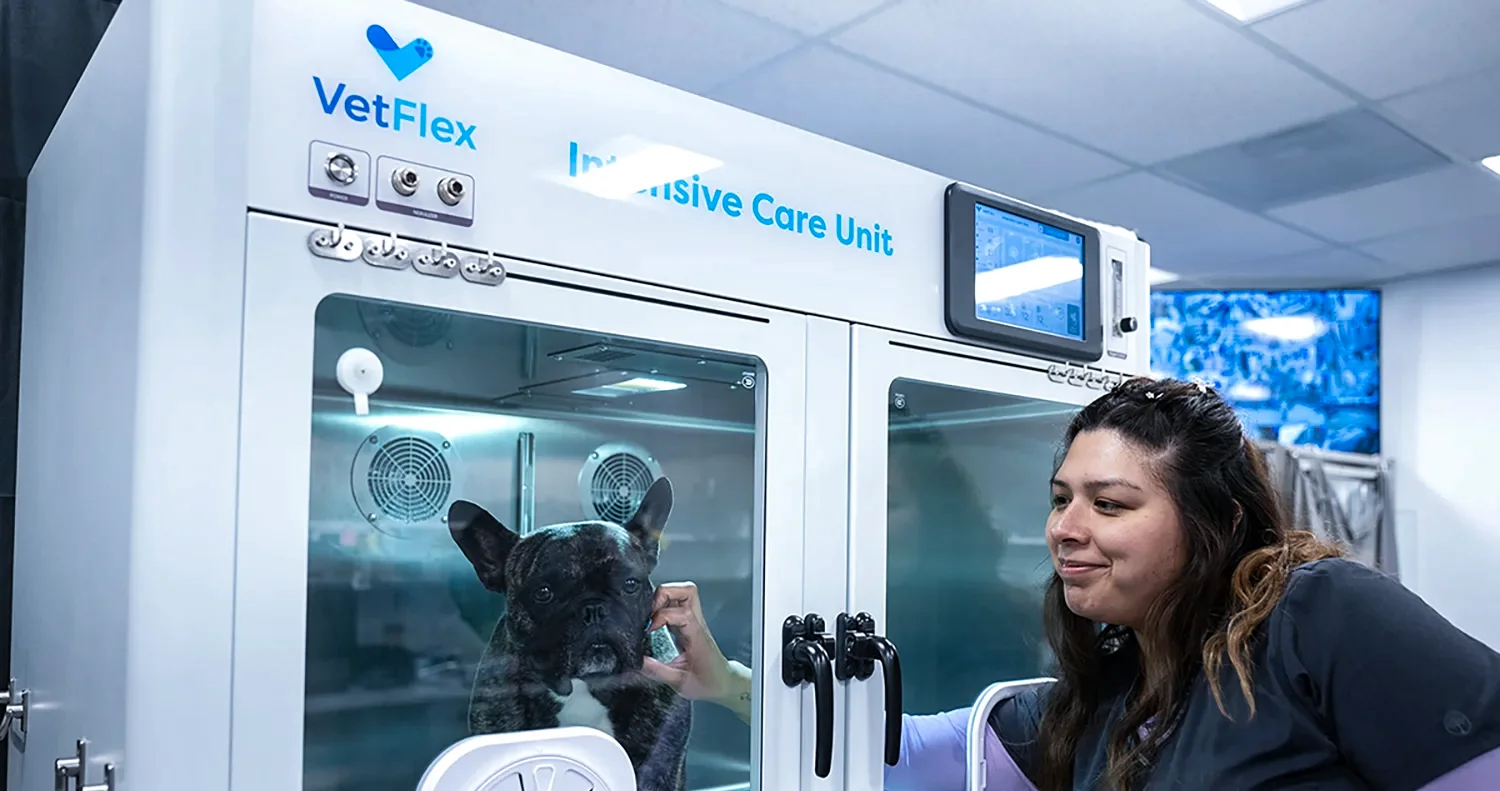
Installation & Operations
Planning, financing, and workflow integration

ICU Equipment Maintenance: Reduce Downtime, Cut Costs, and Protect Patient Safety
A complete veterinary ICU equipment maintenance guide covering daily, weekly, monthly, and quarterly protocols that reduce emergency repair costs, extend equipment life, and protect patient safety.
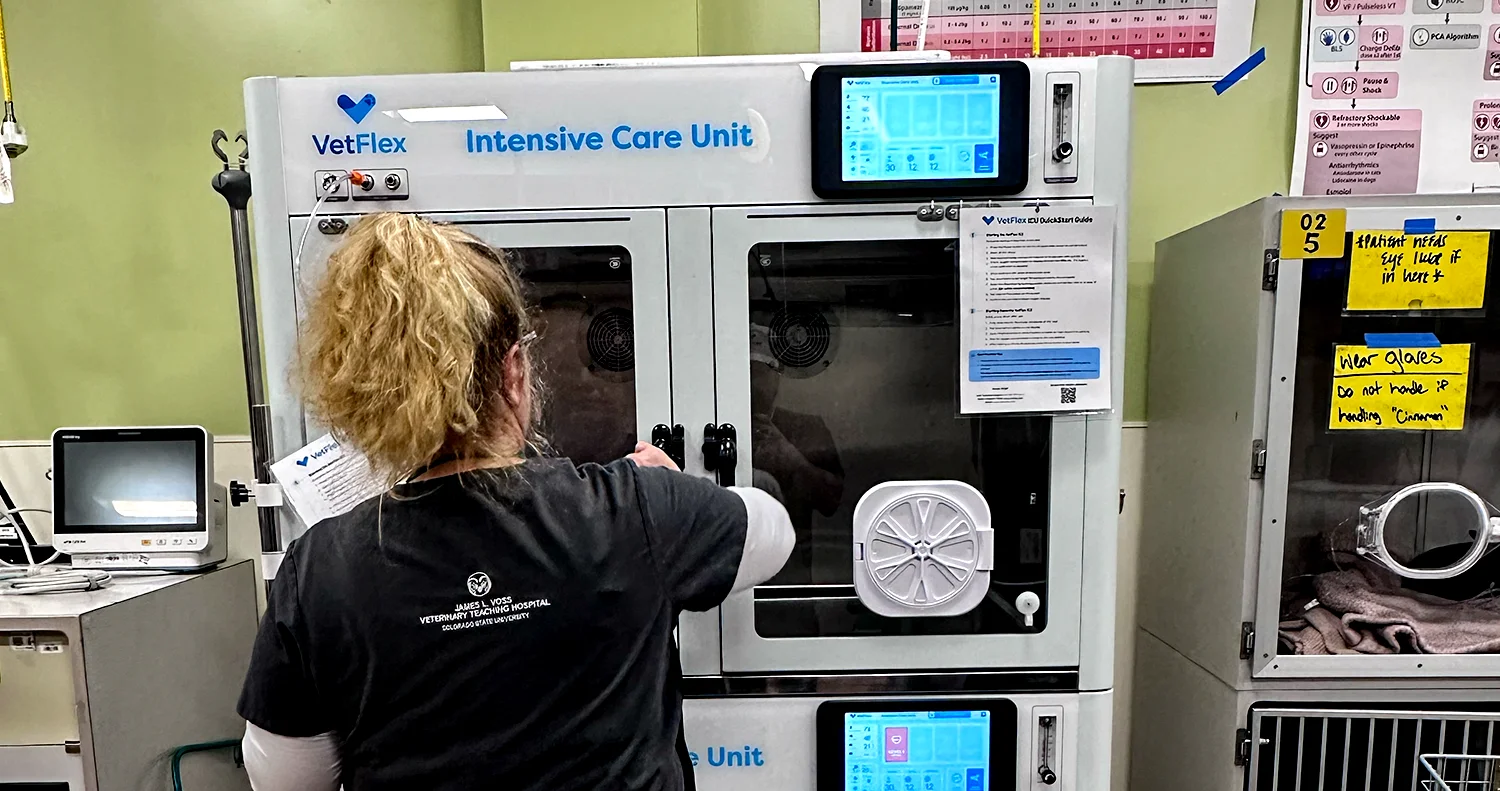
Optimizing the Veterinary ICU: Avoiding Common Setup Mistakes
This article provides a comprehensive guide to avoiding common mistakes in veterinary ICU setup, covering layout, equipment selection, workflow optimization, and staff training for optimal patient outcomes.
Clinical Applications
Recovery protocols and ICU best practices
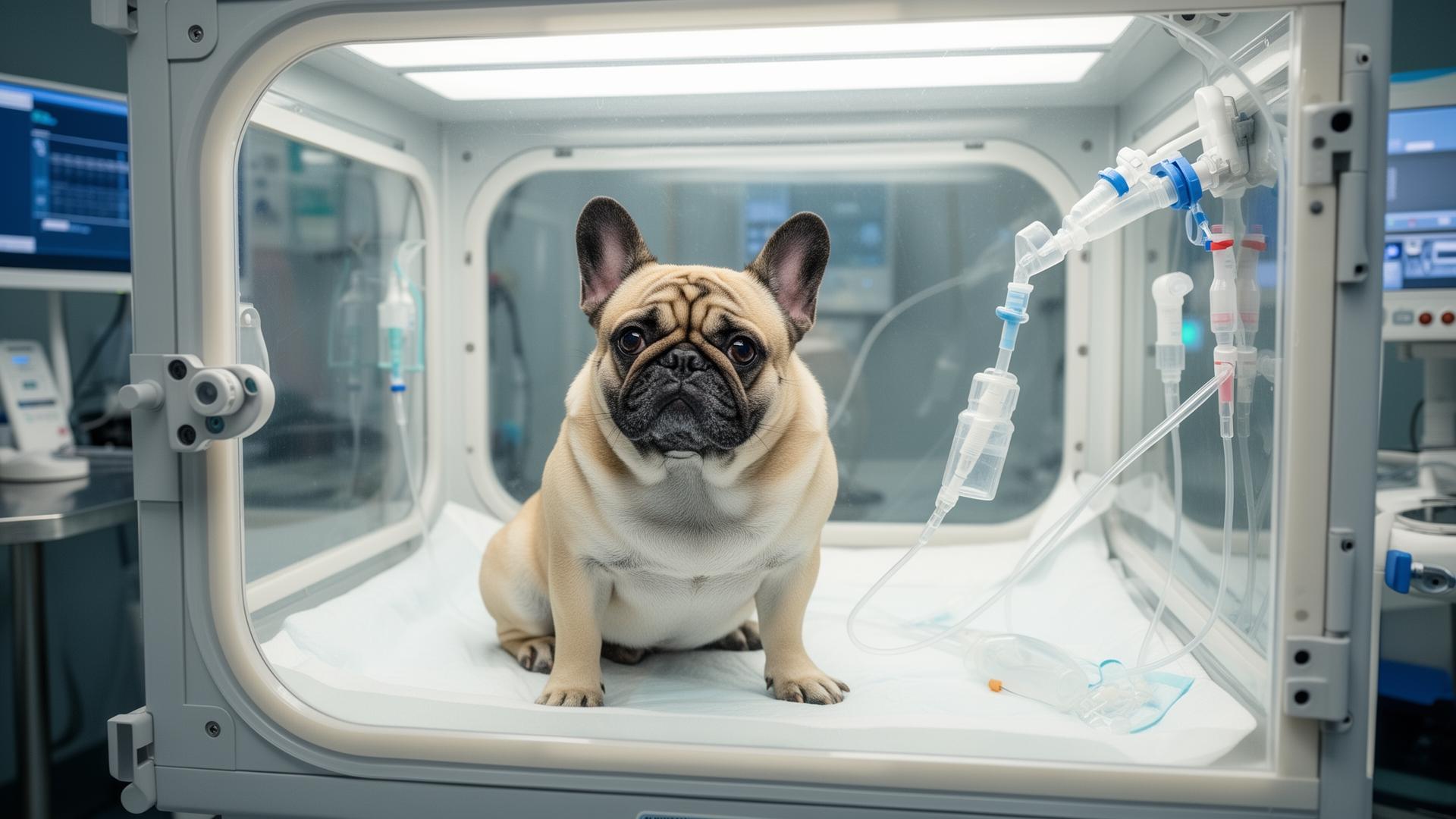
Brachycephalic Dogs and Oxygen Cages: Supporting Flat-Faced Breeds in Respiratory Distress
A clinical guide to managing brachycephalic respiratory emergencies with veterinary oxygen cages, covering BOAS pathophysiology, treatment protocols, and ICU equipment selection.
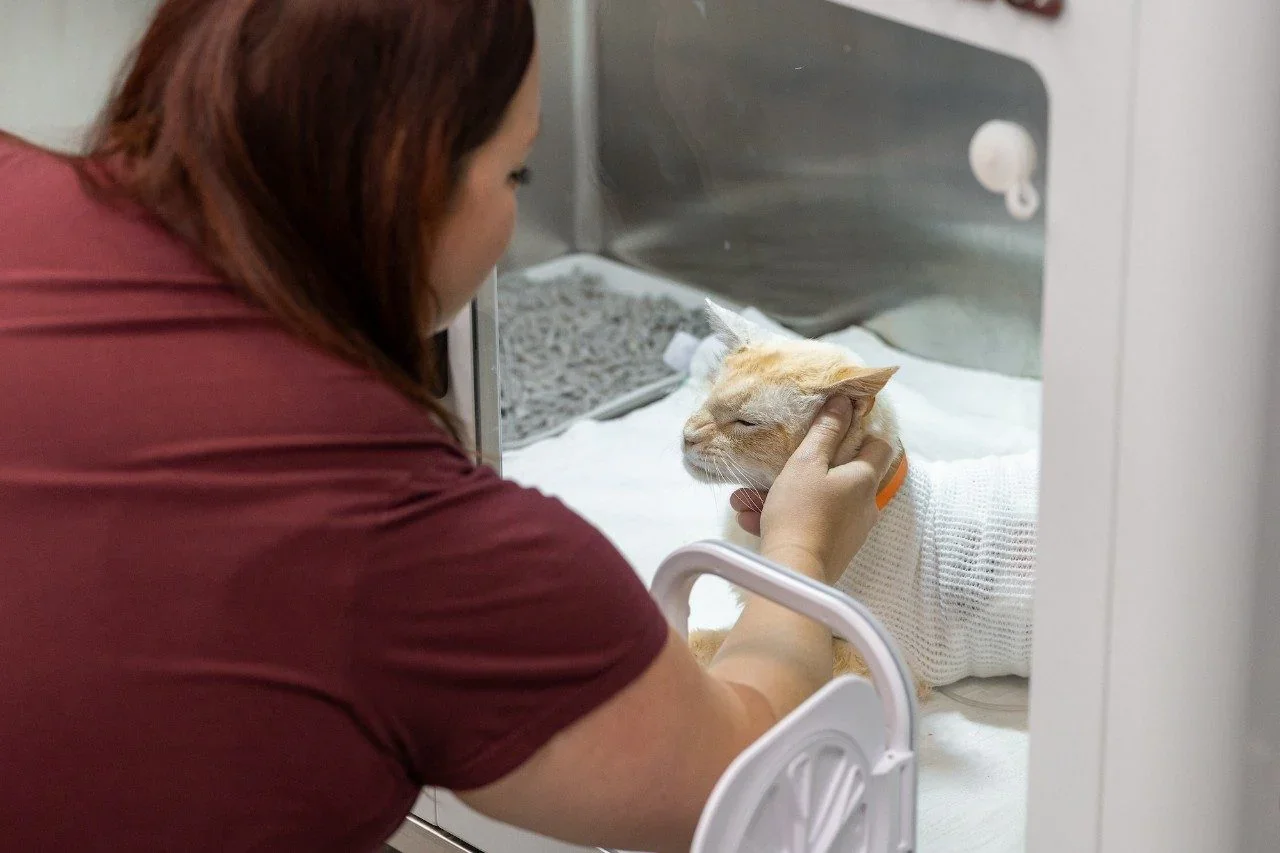
How Virginia Tech Is Using VetFlex Oxygen Cage Technology to Transform Veterinary Oxygen Care
Virginia-Maryland College of Veterinary Medicine at Virginia Tech has officially installed the VetFlex ICU oxygen cage system in their state-of-the-art Veterinary Teaching Hospital, marking a huge step forward for animal health.

The Future of Veterinary Critical Care: AI, Telemedicine, and Next-Gen ICU Technology
An overview of emerging technologies reshaping veterinary critical care, including AI-assisted diagnostics, telemedicine, wearable monitors, and advanced ICU systems, with practical guidance for adoption.
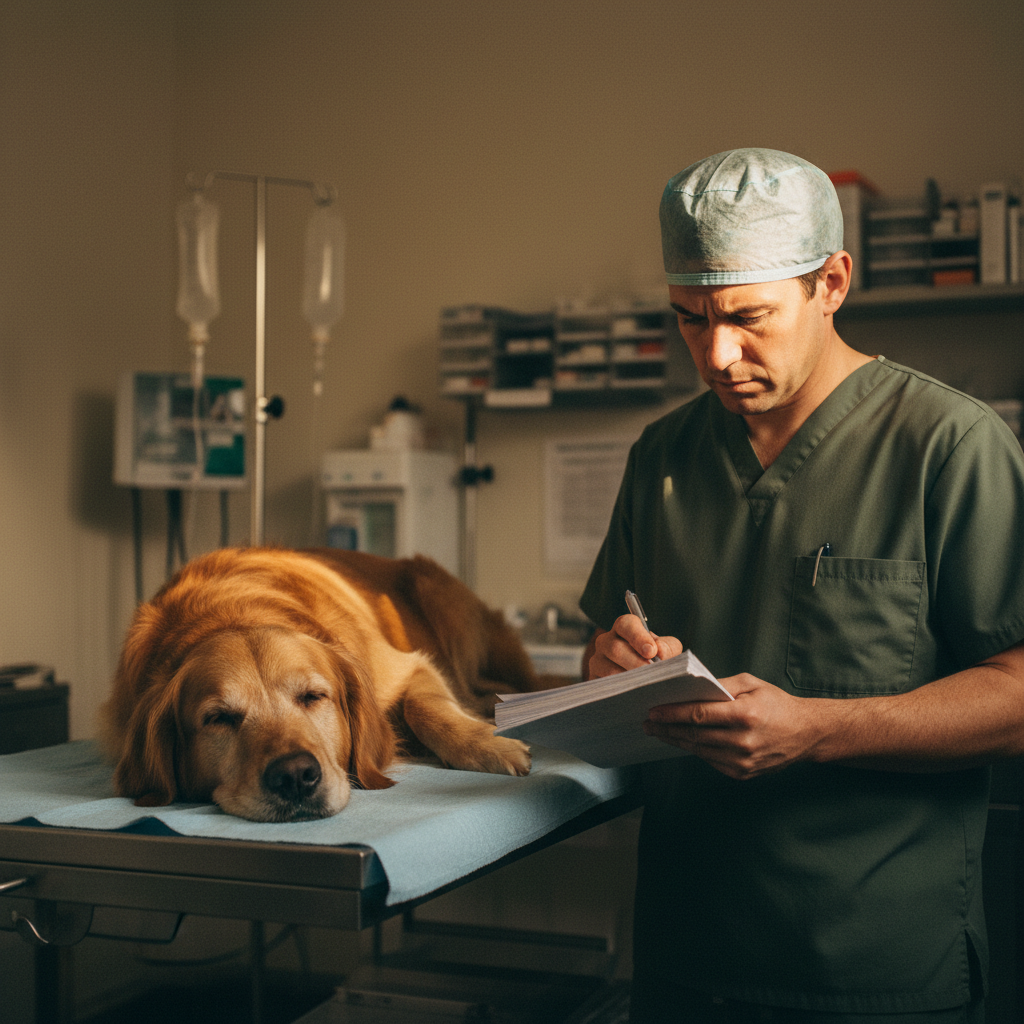
Anesthetic Monitoring in Veterinary Practice: Protocols That Reduce Complications
A clinical guide to veterinary anesthetic monitoring covering cardiovascular, respiratory, oxygenation, temperature, and depth assessment protocols that reduce complications and improve patient outcomes.
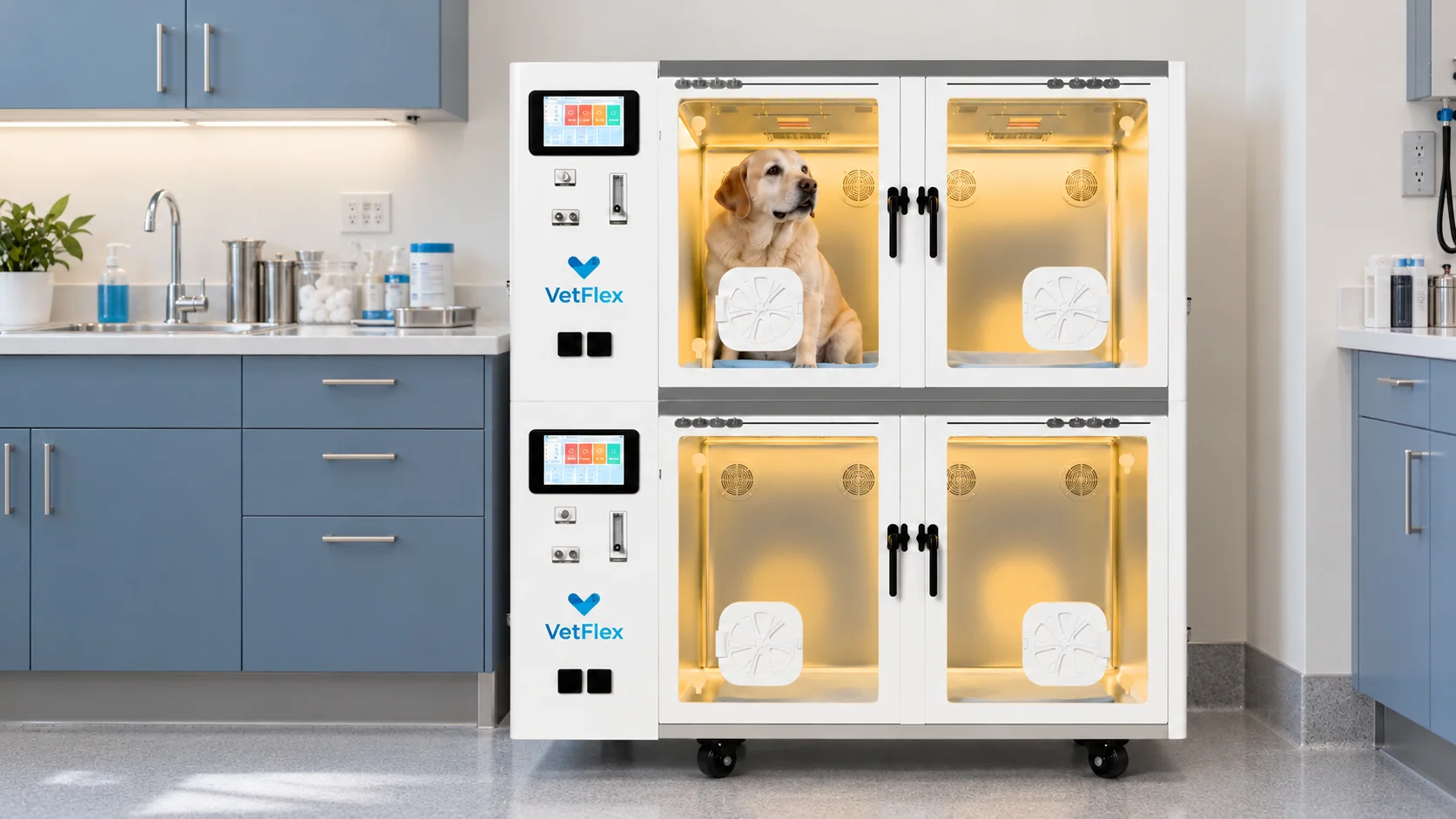
Oxygen Cages for Dogs: When to Use One, What to Set and How to Monitor
A clinical guide for veterinary teams: when a dog needs an oxygen cage, what oxygen, temperature and humidity to set, how to monitor, and how to wean a dog back to room air.