
The Future of Veterinary Critical Care: AI, Telemedicine, and Next-Gen ICU Technology
An overview of emerging technologies reshaping veterinary critical care, including AI-assisted diagnostics, telemedicine, wearable monitors, and advanced ICU systems, with practical guidance for adoption.

VetFlex Editorial Team
Veterinary Equipment Specialists
An AI algorithm detects early sepsis markers in a canine ICU patient 4 hours before clinical signs appear. A rural general practitioner consults with a board-certified criticalist in real time via video during a GDV stabilization. A wearable sensor alerts overnight staff to a subtle heart rate pattern change that precedes cardiac arrest. These are not future projections. They are happening now in veterinary practices that have invested in the right technology infrastructure. The question is no longer whether these tools will transform critical care. The question is whether your practice will adopt them before or after your competitors.
VetFlex ICU systems are built on the technology foundation that supports future integration with AI, remote monitoring, and advanced diagnostics.
Explore ICU TechnologyWhy the Critical Care Landscape Is Shifting Now
Three forces are converging: AI processing power has reached the point where real-time clinical pattern recognition is practical, telemedicine infrastructure has matured past the pandemic-era workarounds, and client expectations for advanced care are rising faster than most practices can respond. Practices that invest in technology infrastructure now will have a significant competitive advantage in the next 3-5 years.
Why Forward-Thinking Clinics Are Investing in Critical Care Technology
- AI-assisted monitoring detects deterioration patterns hours before clinical signs are visible to staff
- Telemedicine connects general practitioners with specialists in real time, eliminating geographic barriers to expertise
- Wearable monitors provide continuous data without tethering patients to bedside equipment
- Digital data logging supports quality improvement, outcome tracking, and evidence-based protocol refinement
- Clients increasingly seek practices that demonstrate advanced technology capabilities
AI in Veterinary Critical Care: Pattern Recognition at Scale
AI excels at tasks that overwhelm human attention: monitoring dozens of parameters simultaneously across multiple patients and detecting subtle trend changes that precede clinical deterioration. Current applications include sepsis prediction 4-6 hours before overt signs, cardiac arrhythmia forecasting from ECG trend analysis, respiratory failure prediction integrating oxygenation trends with clinical context, and radiograph interpretation with 34% improved detection of subtle pulmonary patterns.
AI is an augmentation tool, not a replacement. It works best when fed quality data from properly calibrated, integrated monitoring systems. The foundation matters.
Telemedicine: Specialist Access Without Geographic Limits
High-definition video, real-time data sharing, and remote monitoring platforms connect general practitioners with criticalists anywhere. This is particularly valuable for overnight ICU coverage, complex case planning, and emergency specialist consultation when transfer is not feasible.
Live Case Consultation
Stream video and vitals to specialists for real-time guidance during critical cases.
Remote ICU Monitoring
Criticalists review ICU patients remotely, improving overnight coverage without on-site staffing costs.
Asynchronous Review
Upload diagnostics for expert review within hours for complex case planning.
Virtual Education
Case-based learning and virtual rounds bring teaching hospital expertise to any practice.
Wearable Technology: Continuous Monitoring Without Cables
Next-generation wearables free patients from bedside equipment while providing continuous, multi-parameter monitoring. Current capabilities include accelerometer-based activity and pain scoring, continuous core temperature via ingestible or implantable sensors, impedance-based hydration assessment, and respiratory pattern analysis beyond simple rate counting.
| Parameter | Traditional Monitoring | Wearable Technology |
|---|---|---|
| Heart Rate | Continuous but tethered | Continuous and mobile |
| Temperature | Intermittent rectal | Continuous core temp |
| Activity/Position | Visual observation | Accelerometer tracking |
| Respiratory Rate | Manual count | Pattern analysis |
| Hydration | Clinical assessment | Bioimpedance sensing |
How VetFlex ICU Systems Provide the Foundation for Future Technology
Every emerging technology in veterinary critical care depends on one thing: quality data from reliable, integrated monitoring systems. VetFlex ICU systems provide continuous, real-time monitoring of oxygen, CO2, temperature, and humidity. This data infrastructure is the foundation that AI analysis, remote monitoring, and trend-based decision support build upon. Practices that invest in integrated ICU systems now are positioning themselves for seamless adoption of AI and telemedicine capabilities as they mature.
- Real-time multiparameter monitoring generates the data that AI systems require
- AERAFLOW™ continuous air exchange provides stable environmental baselines for trend analysis
- Digital outputs support integration with practice management and telemedicine platforms
- STERILION™ ion sterilization maintains consistent environmental conditions that reduce confounding variables in patient monitoring
Build your critical care technology foundation with VetFlex ICU systems.
Compare ICU SystemsCost and Operational Impact of Technology Adoption
Technology adoption is an investment, not an expense. Practices that implement AI-assisted monitoring report 40% improvement in after-hours emergency response times. Telemedicine consultations reduce unnecessary transfers, keeping revenue in-house. And comprehensive monitoring systems reduce liability by providing documented, continuous patient data. The practices that invest strategically in technology infrastructure generate better outcomes, higher client satisfaction, and stronger financial performance.
When to Start Investing in Critical Care Technology
- Your after-hours ICU coverage relies entirely on in-person staffing
- You are transferring cases that could be managed with specialist telemedicine support
- Your monitoring equipment does not provide trend data or digital outputs
- Client expectations for advanced care are increasing in your market
- You are planning to expand critical care services in the next 2-5 years
Practical Steps to Prepare Your Practice
Invest in Digital Infrastructure
Reliable internet, robust WiFi, and integrated practice management systems are prerequisites for telemedicine and AI tools.
Standardize Data Collection
AI and predictive systems require consistent, quality data. Implement standardized monitoring protocols and thorough documentation.
Start with Telemedicine
Telemedicine represents the lowest barrier to entry. Establish relationships with specialist services now.
Upgrade ICU Equipment
Integrated monitoring systems with digital outputs provide the data foundation for every emerging technology.
Budget for Innovation
Set aside capital for technology acquisition. The practices that thrive will be those that invest strategically.
Frequently Asked Questions
The Future Belongs to Practices That Prepare Now
The technology is already here. AI diagnostics, telemedicine, wearable monitors, and advanced ICU systems are not hypothetical. They are operational in practices today. The competitive advantage goes to practices that build the technology foundation now, starting with integrated monitoring systems and digital infrastructure that support every innovation ahead.
Start building your critical care technology foundation today.
Request InformationRelated reading: VetFlex soda lime-free ICU systems, ICU equipment maintenance, and anesthetic monitoring protocols.
Download Product Specifications
Get ICU System Pricing & Specifications
Fill out the form below and our team will reach out within 24 hours.
See the ICU in action
Key Takeaways
Related Decision Guides
ICU Oxygen Cage Buying Guide
Compare features, costs, and choose the right system for your practice.
Read GuideSoda Lime vs Soda Lime-Free ICU
Understand the clinical and financial case for eliminating soda lime.
Read GuideBest Veterinary Oxygen Cage
Evaluate features, monitoring, and cost of ownership across systems.
Read GuideICU & Critical Care Equipment
Need oxygen without central O₂? Explore the VetFlex Veterinary Oxygen Concentrator
How did you find this article?
Was this article helpful?
Your feedback helps us understand what content matters most to you.
Related Clinical Insights
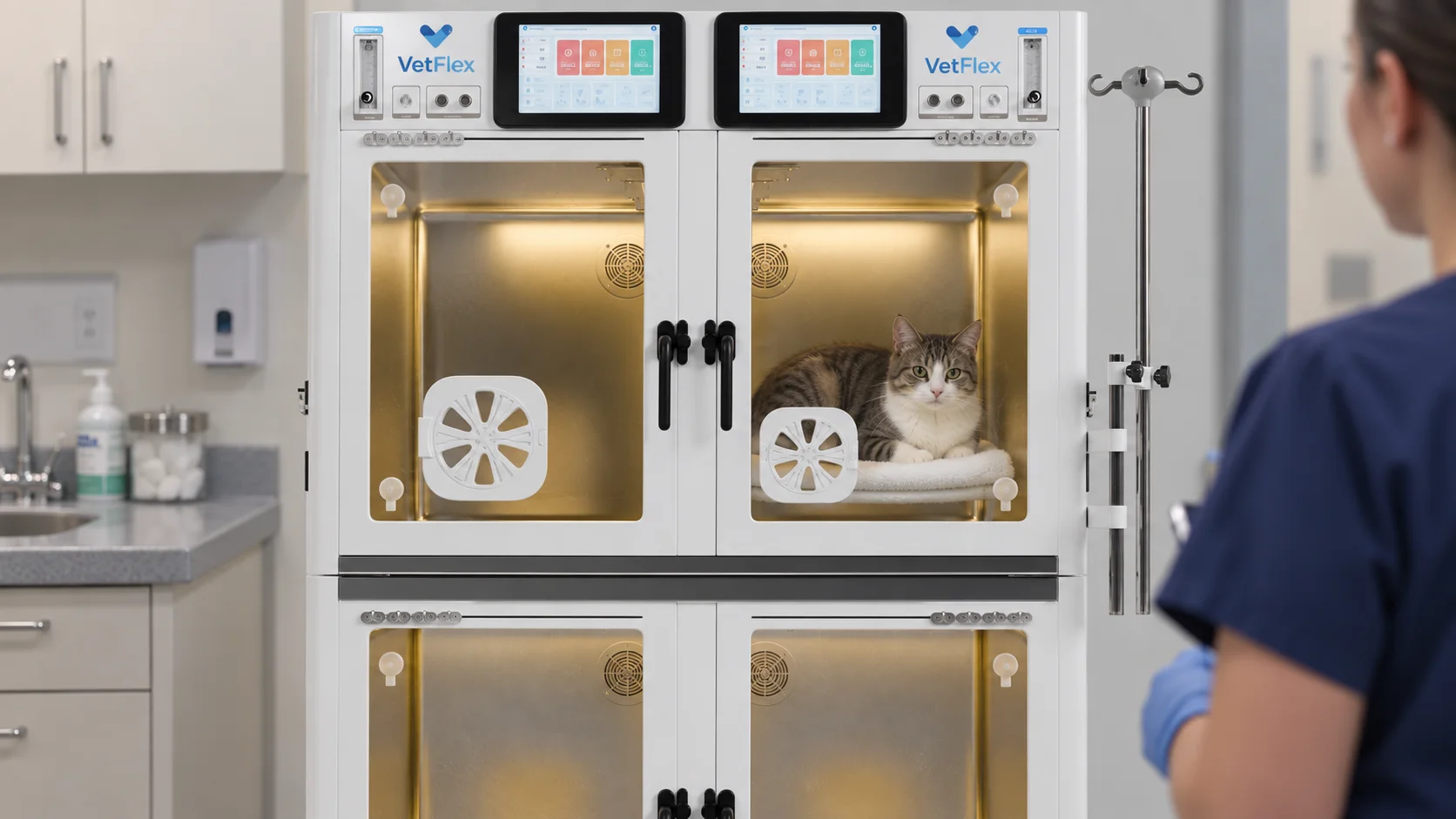
Feline Respiratory Distress Management: A Clinical Guide for Veterinary Teams
For a cat in respiratory distress, even a simple exam can be life-threatening. This guide provides veterinary professionals with actionable strategies for hands-off feline respiratory distress management, focusing on advanced environmental control to improve patient outcomes.
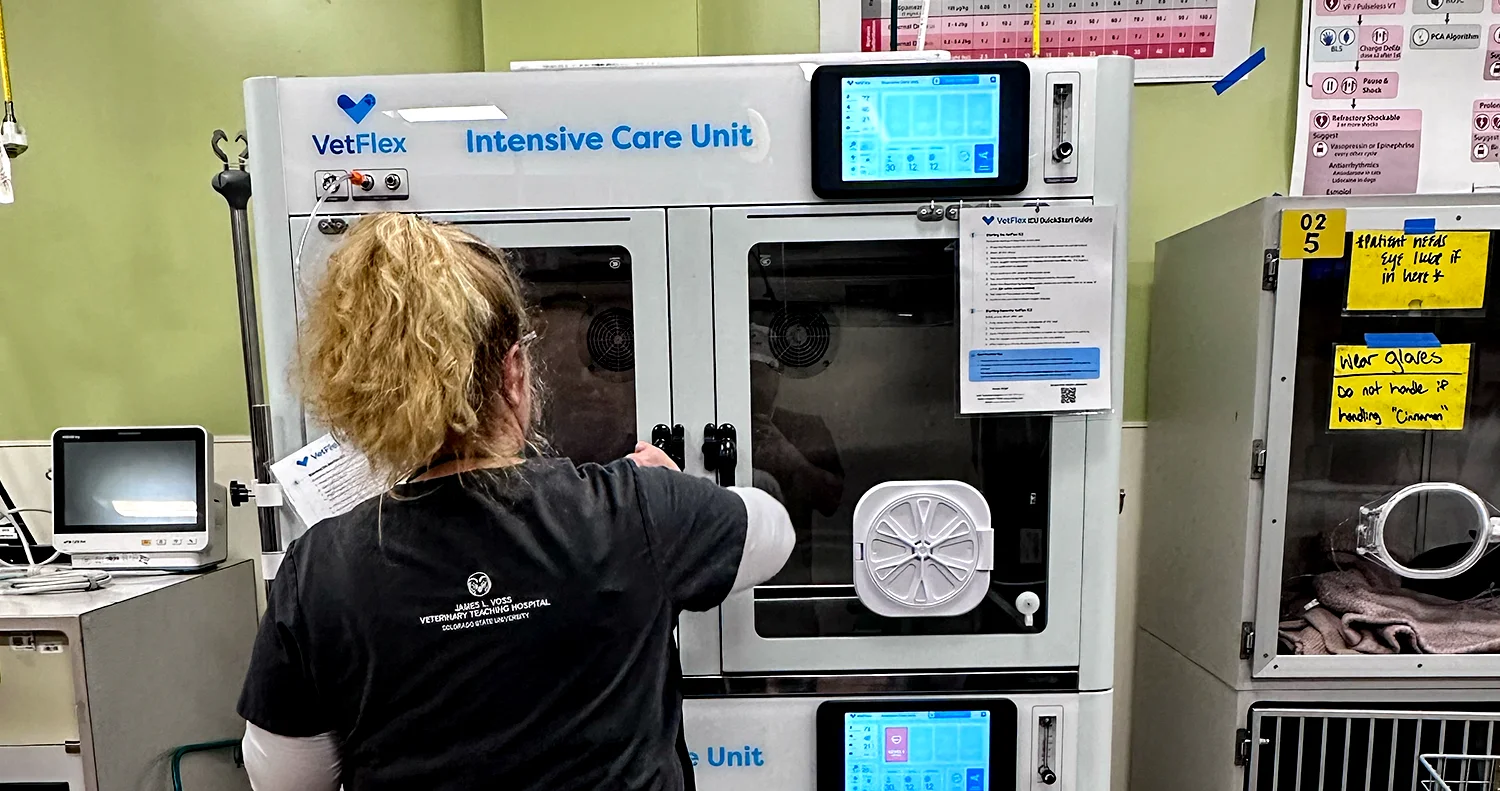
Optimizing the Veterinary ICU: Avoiding Common Setup Mistakes
This article provides a comprehensive guide to avoiding common mistakes in veterinary ICU setup, covering layout, equipment selection, workflow optimization, and staff training for optimal patient outcomes.
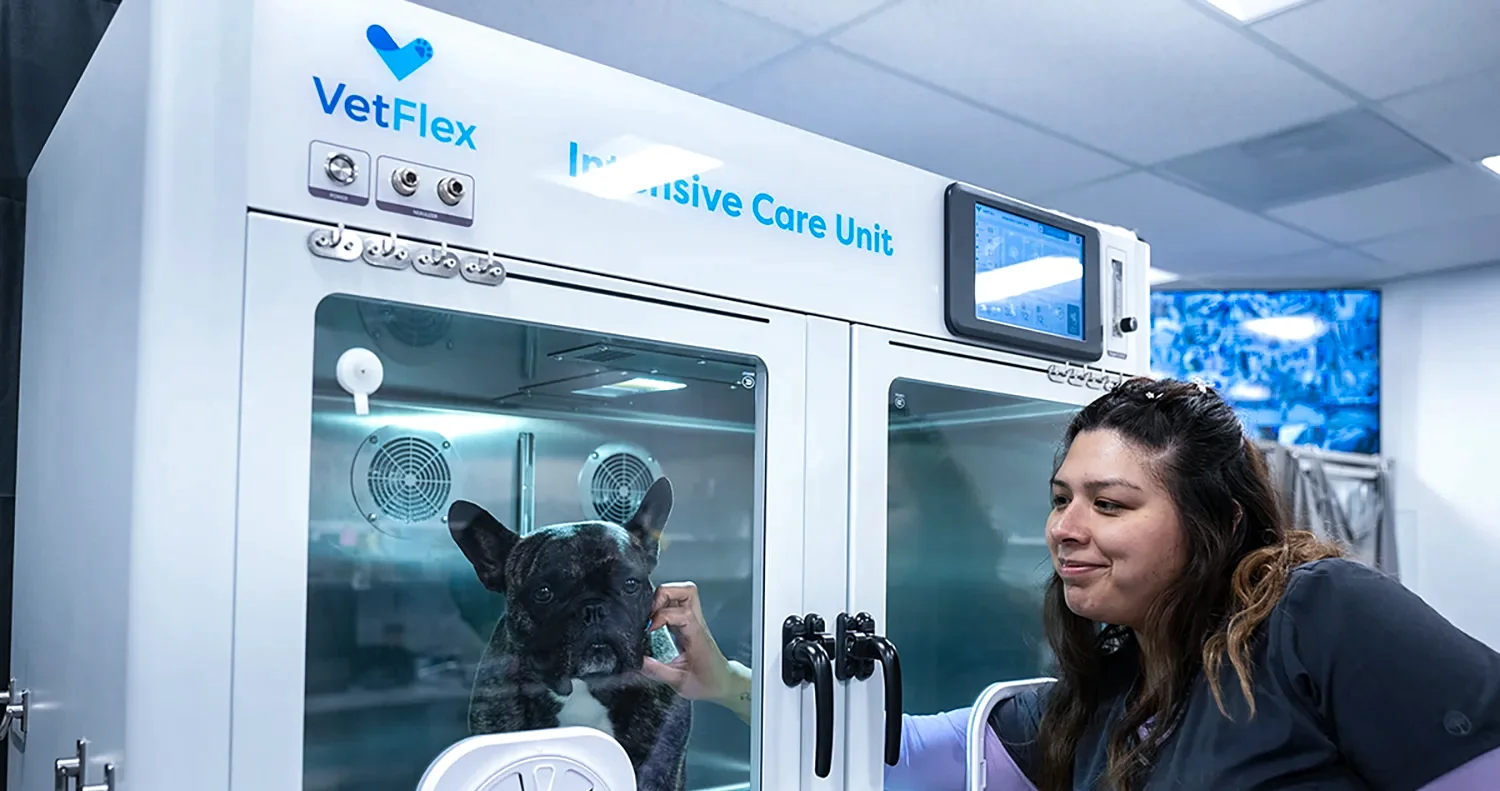
Optimizing Patient Recovery: How Modern Veterinary ICU Oxygen Cages Work
Explore the clinical mechanics of modern ICU oxygen therapy, focusing on ventilation technology, pathogen control, and environmental stability for critical patients.