Trusted by 100's of Veterinary Clinics Nationwide • 0% APR Financing AvailableView ICU financing options
A clinical comparison of CO₂ management methods for veterinary ICU oxygen cages and what the difference means for your operation.
Understand the cost, safety, maintenance, and performance differences between chemical absorption and electronic ventilation.
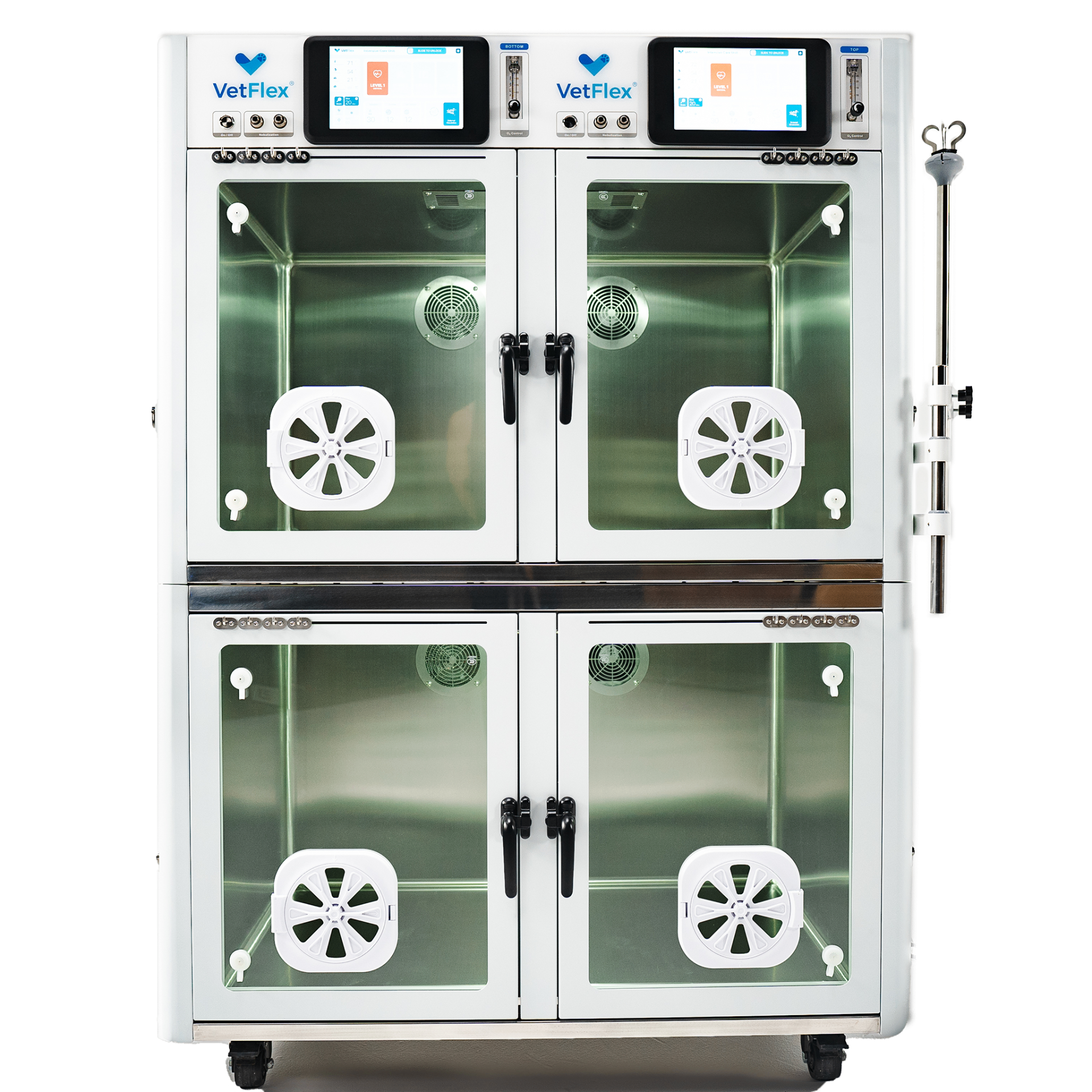
Most clinics evaluating ICU systems are comparing two fundamentally different approaches to CO₂ management. Soda lime systems use chemical absorption that requires ongoing consumable replacement. Soda lime free systems use electronic ventilation that eliminates consumables entirely. The right choice depends on your clinic's volume, budget horizon, and operational priorities.
This guide is designed to help veterinary clinics evaluate CO₂ management methods based on real world cost, safety, and workflow considerations.
Soda lime costs averaging $3,000+ per year in consumable replacement (estimated)
Staff handling chemical absorbent material during every change cycle
CO₂ levels fluctuate between consumable changes creating inconsistent environments
Color indicator checks required multiple times per shift
Environmental disposal requirements for spent chemical absorbent
No continuous CO₂ monitoring on most soda lime systems
Soda lime systems have comparable upfront cost but significantly higher ongoing expense. Soda lime free systems eliminate recurring consumable costs entirely.
Soda lime requires regular replacement, color indicator checks, and proper disposal. Electronic ventilation requires minimal maintenance with no consumable handling.
Soda lime effectiveness degrades between changes, creating variable CO₂ environments. Electronic ventilation maintains consistent air exchange continuously.
Chemical absorbent handling, monitoring, and replacement scheduling adds to staff workload. This burden scales with the number of ICU cages in operation.
Soda lime is a chemical irritant that requires careful handling. Electronic ventilation eliminates direct staff contact with chemical absorbents.
High volume clinics often prioritize systems that reduce ongoing maintenance and consumable dependency.
Estimated operating cost comparison over a typical five year ownership period.
$31,500
Estimated total savings
~$525/mo
Estimated monthly impact
Over a typical lifecycle, ongoing consumables and maintenance often exceed the initial system cost. All figures are estimated averages.
At an estimated $3,000+ per year, soda lime alone can cost more than the original equipment over a five year period.
Consumable monitoring, replacement, and disposal require staff attention multiple times per week. This compounds in multi cage environments.
Soda lime color indicators are imprecise and can be affected by ambient lighting. Digital CO₂ monitoring provides more reliable data.
VetFlex soda lime free systems are competitively priced with traditional systems, while eliminating $15,000+ in consumable costs over five years (estimated).
Clinics currently spending $250+ per month on soda lime consumables
Emergency hospitals where staff time is critical and consumable management adds burden
Multi cage environments where consumable costs scale linearly with each unit
Practices prioritizing consistent CO₂ levels without manual monitoring
Clinics planning to reduce chemical handling and improve staff safety
High usage environments where consumable depletion risk is highest and staff time is most constrained.
Practices adding ICU capability who want to avoid establishing a soda lime procurement and disposal workflow.
Environments where consistent, measurable CO₂ management supports clinical education and research standards.
Compare models and options
Get detailed spec sheets
Get a quote for your clinic