Veterinary Gloves Guide: Exam, Surgical, Chemo and Biodegradable
Choose veterinary gloves by task, material, sterility and documented tests, then compare fit, pack counts and listed prices.
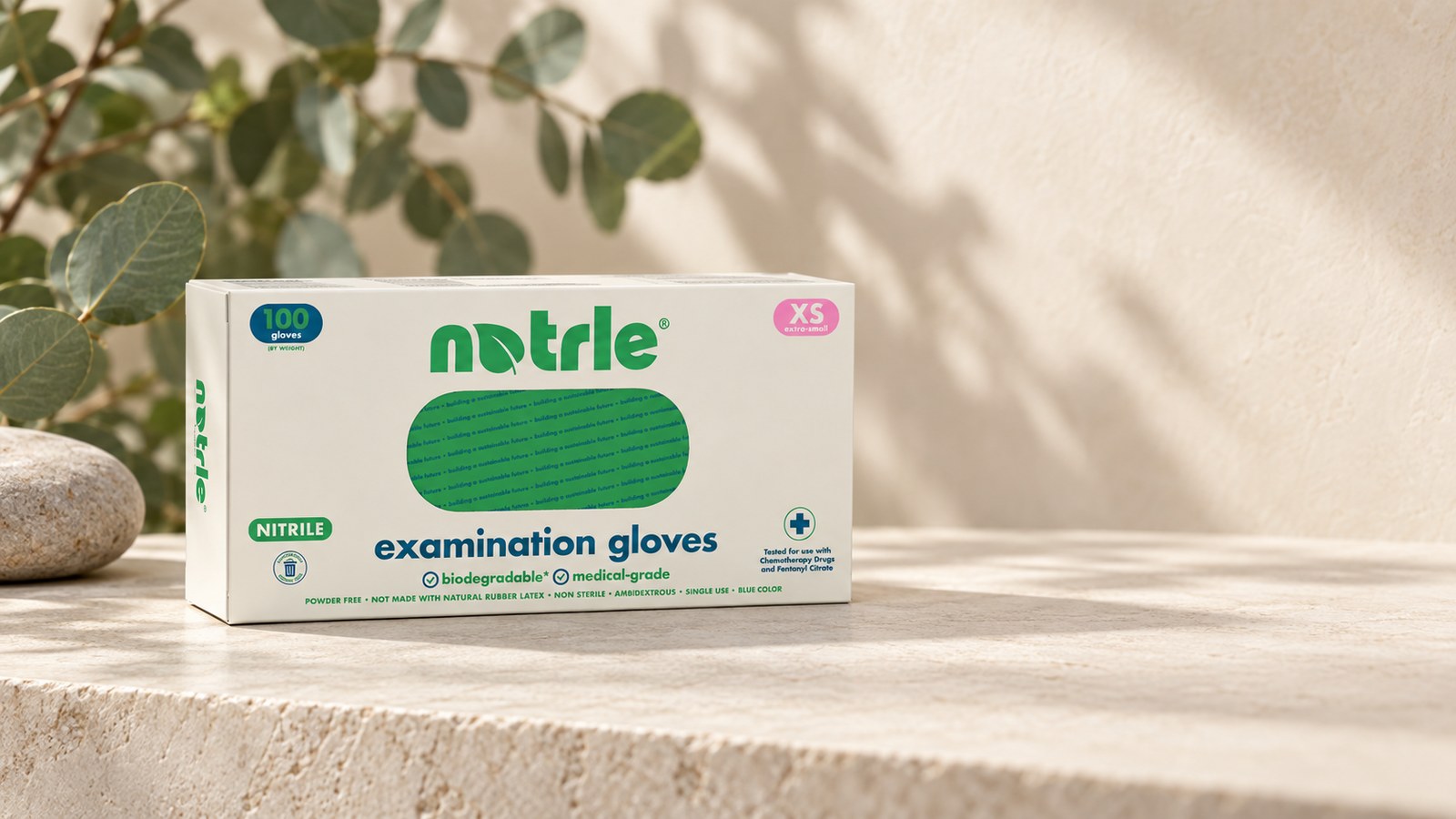
Natrle nitrile exam gloves are latex free and use EcoDegra™ technology. Natrle surgical gloves are sterile natural rubber latex. Chemotherapy testing and biodegradability are separate attributes, not substitutes for the clinical glove type your procedure requires.
Last reviewed by VetFlex Clinical Education Team: March 13, 2026
Key Topics Covered
Material properties, barrier protection, and tactile feedback comparison
How accelerated biodegradation works in nitrile exam gloves
Sterility requirements and latex surgical glove best practices
Understanding latex sensitivity in veterinary settings
Glove use in contamination prevention and sterile technique
What permeation testing measures and how breakthrough times are reported
Start with the task, then choose the glove
Veterinary glove selection starts with the procedure, material and required sterility. Routine examinations and other non sterile clinical tasks are different from sterile surgical work. Hazardous drug handling adds the need to review drug specific permeation documentation. Biodegradability is a separate attribute of a particular glove formulation, not a replacement for any of those clinical requirements. A useful buying guide therefore compares several attributes together instead of assuming that exam, surgical, chemo rated and biodegradable are four mutually exclusive categories.
Within the Natrle range, the exam glove is a non sterile nitrile product and the surgical glove is a sterile natural rubber latex product. Both lines have published chemotherapy testing information, while the EcoDegra™ biodegradation claim belongs only to the nitrile examination line. Start with Veterinary exam gloves, Veterinary surgical gloves and the ASTM D6978 Chemo Rated Gloves guide, then review the exact product and size your team needs.
Exam versus surgical: compare the published specifications
| Attribute | Natrle nitrile exam | Natrle latex surgical |
|---|---|---|
| Material | Synthetic nitrile, latex free | Natural rubber latex |
| Sterility | Non sterile examination | Sterile surgical |
| Powder | Powder free | Powder free |
| Published glove standard | ASTM D6319 | ASTM D3577 |
| Published AQL | 1.5 watertightness | 0.65 pinhole |
| Chemotherapy testing | ASTM D6978 | ASTM D6978 |
| Other documented test | ASTM D5511 landfill biodegradation | ASTM F1671 viral penetration |
| Sizes | XS, S, M, L, XL | 5.5 through 9.0 |
| Box and case | 100 or 200 gloves; 1,000 or 2,000 glove cases | 50 pairs per box; 200 pairs per case |
| Biodegradable product claim | EcoDegra™ exam line only | Not the biodegradable exam line |
Each row answers a different purchasing question. AQL values are the published product values, not a reason to substitute one glove type for another. Latex free describes the nitrile exam material; it should not be applied to the natural rubber surgical glove. ASTM D6978 identifies a chemotherapy permeation test method, while ASTM D6319 and D3577 identify different examination and surgical specifications. Read the actual product documentation with the procedure requirements rather than choosing from a single headline number.
Who nitrile examination gloves are for
Natrle nitrile exam gloves suit teams selecting a non sterile examination glove for veterinary clinical tasks. The site lists latex free and powder free construction, an ambidextrous design, textured fingertips and a beaded cuff. Sizes run from XS through XL. For clinics standardizing exam supplies, review fit and handling with staff as well as the box and case configuration. The glove's examination specifications and intended task should remain the starting point even when biodegradable packaging or environmental attributes are important to purchasing.
Nitrile is synthetic nitrile butadiene rubber, not natural rubber latex. It contains none of the natural rubber proteins associated with latex allergy. That distinction is useful for a team with latex sensitivities, but it does not mean every irritation is caused by latex or that every nitrile formulation addresses chemical accelerator sensitivities. Read are nitrile gloves latex free? and latex allergy in veterinary clinics and glove selection for the existing material and sensitivity explanations.
Who sterile latex surgical gloves are for
The Natrle surgical line is for selection where a sterile surgical glove is required and natural rubber latex is appropriate for the team and procedure. Published product information emphasizes anatomical fit, tactile sensitivity, elasticity and a beaded cuff. The line is powder free and sterile, lists AQL 0.65, and references ASTM D3577 and ASTM F1671. These are surgical product facts, not specifications to assume for an examination glove merely because it shares the Natrle brand.
Surgical sizes are numeric, 5.5 through 9.0, and the gloves are packaged as individually wrapped pairs. The 50 pair surgical box and 200 pair surgical case are distinct ordering units. The case contains four boxes. Review the surgical range and its specification sheet before purchasing. Do not use the biodegradable nitrile exam claim to describe these natural rubber latex surgical gloves.
Who chemo rated gloves are for
A chemotherapy rating matters when a practice evaluates gloves for the specific hazardous drugs it handles. The Natrle exam and surgical lines both carry published ASTM D6978 testing information. That does not make the two products interchangeable: the required material, sterility and fit still matter. The useful evidence is the tested drug list and its reported permeation times, considered alongside the product documentation and facility procedures. A general statement that a glove is nitrile or surgical does not provide those drug specific results.
Use the ASTM D6978 guide to understand how laboratory breakthrough times are reported. The rating is not a claim of indefinite protection or suitability for every drug and exposure. Keep the selection linked to the agents used by the practice and its hazardous drug protocols. When comparing purchasing options, record the exact glove line and ordering unit so a change in box count or supplier does not accidentally become a change in material or clinical specification.
Who biodegradable nitrile gloves are for
Biodegradable nitrile exam gloves are an option for clinics seeking a documented environmental attribute alongside their examination glove requirements. Natrle uses EcoDegra™ technology, described on the site as organic additives supporting microbial breakdown in biologically active landfill conditions. NATRLE exam gloves reached 81% biodegradation in 490 days under ASTM D5511 landfill test conditions. Conventional nitrile can take 100+ years. Actual rates vary with landfill conditions. Preserve that qualification when comparing products or recording an approved purchasing claim.
Biodegradable does not describe every nitrile glove, and it does not change whether a glove is sterile or chemotherapy rated. The Natrle exam product pages describe the same puncture resistance and barrier protection as standard nitrile, with ASTM D6319 examination documentation. Review the informational biodegradability guide for the distinction between material, test conditions and product claims, then use Natrle to choose the actual exam format.
Buying by box or case: counts and price per glove
The published Natrle exam prices are $6.99 for 100 gloves and $13.98 for 200 gloves. Cases are $69.90 for 1,000 gloves and $139.80 for 2,000 gloves. Each works out to $0.0699 per glove, approximately $0.07, so these listed prices do not establish a unit price discount for a bigger pack. The operational comparison is different: 1,000 gloves require ten 100 count boxes or five 200 count boxes. Larger counts mean fewer inner boxes to open and replace at the same usage.
Review 200 versus 100 count gloves for the published box dimensions, case volume comparison and dispenser checks. Surgical pricing uses pairs: the listed $35 box contains 50 pairs and the $140 case contains 200 pairs. That is $0.70 per pair or $0.35 per glove, without tax, shipping or account terms. It is not an exam glove price comparison because the surgical line is sterile latex and serves a different task.
The four exam ordering pages are Natrle 100 count exam box, Natrle 200 count exam box, Natrle 1,000 count exam case, Natrle 2,000 count exam case. The surgical options are the 50 pair box and 200 pair case. Check size and pack count on each product, and use the existing quote option for clinic purchasing. Keep exam sizes and surgical numeric sizes separate when recording the approved range.
Essential Reading

Exam Gloves
Biodegradable nitrile exam gloves