
Are Nitrile Gloves Latex Free? What Veterinary Teams Should Know
Yes. Nitrile gloves are latex-free because they are made from synthetic nitrile butadiene rubber, not natural rubber latex. They contain none of the natural rubber proteins associated with latex allergies. For veterinary teams, nitrile exam gloves provide a latex free option for examinations and other non sterile clinical tasks; chemical accelerator sensitivities remain a separate consideration.

VetFlex Editorial Team
Veterinary Equipment Specialists
Are nitrile gloves latex free?
Yes. Nitrile gloves are latex-free because they are made from synthetic nitrile butadiene rubber, not natural rubber latex. They contain none of the natural rubber proteins associated with latex allergies. For veterinary teams, nitrile exam gloves provide a latex free option for examinations and other non sterile clinical tasks; chemical accelerator sensitivities remain a separate consideration.
Quick answer
No.
Nitrile gloves use synthetic rubber, not natural rubber latex.
They do not contain the natural rubber proteins linked to latex allergy.
Key points
- Nitrile is a synthetic glove material.
- Nitrile exam gloves are latex free.
- Glove chemicals can still cause skin sensitivity.
- Match glove type to the clinical task.
- NATRLE surgical gloves contain natural rubber latex.
Sensitivity to glove chemicals is a separate issue.
What to know
A veterinary technician develops contact dermatitis after years of latex glove use. A new hire discloses a latex allergy during onboarding. A client reports a latex sensitivity before a procedure involving their pet.
These scenarios happen daily in veterinary and healthcare settings. Latex allergies affect 4.3% of the general population and 10-17% of healthcare workers, making latex-free alternatives an operational requirement, not a preference.
Cross-contamination during manufacturing or packaging at the factory is a caveat, so check for latex-free labeling.
The short answer: No. Nitrile gloves are latex-free. They are made from synthetic nitrile butadiene rubber and contain none of the natural rubber proteins that cause latex allergies.
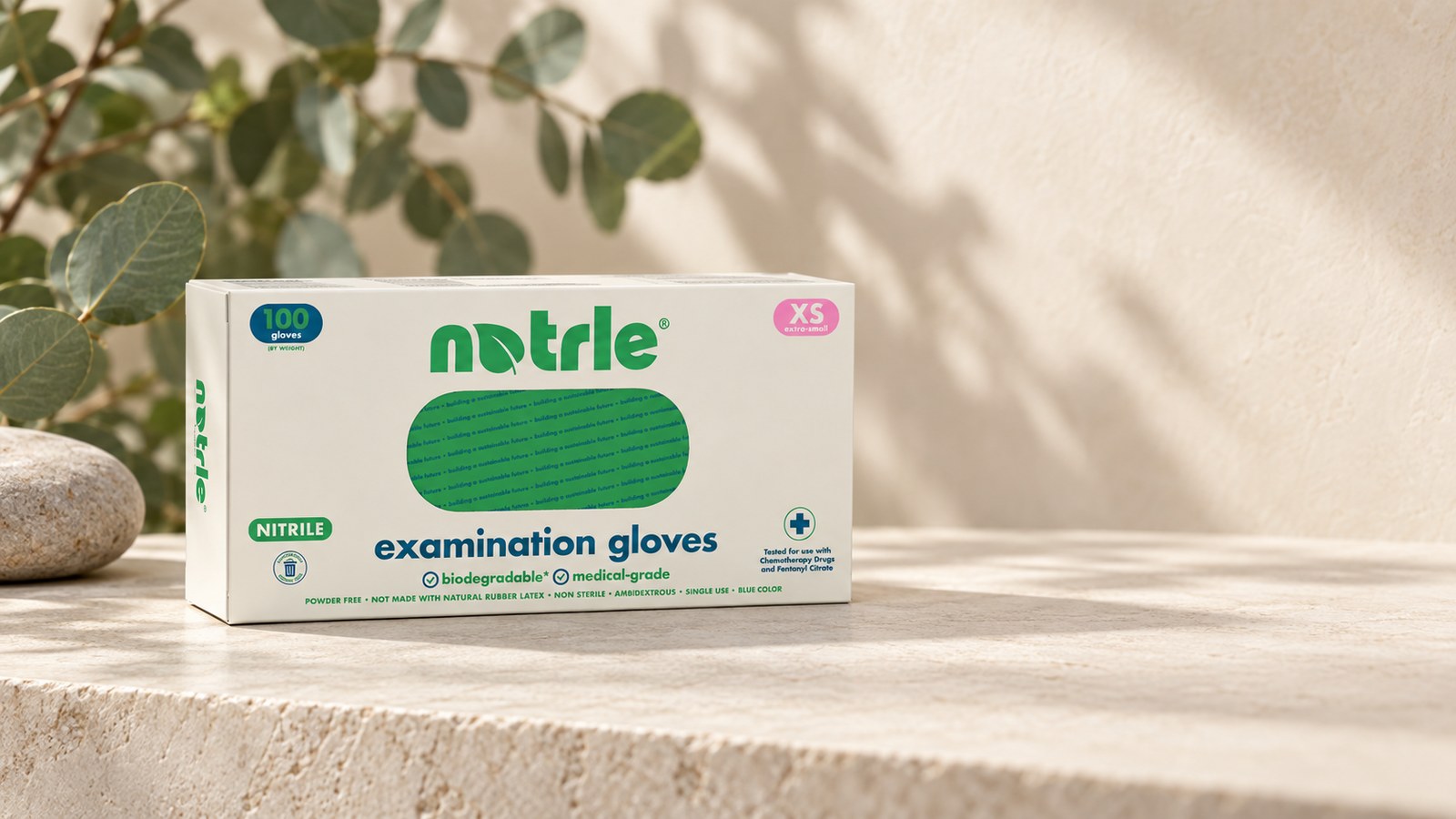
Need latex-free exam gloves for your clinic? NATRLE nitrile exam gloves are latex-free and powder-free, 200 gloves per box.
Shop NATRLE GlovesWhy Glove Material Selection Matters for Clinical Operations
Glove selection affects three operational areas: staff safety (allergy and sensitivity risk), clinical protection (puncture and chemical resistance), and cost (per-glove cost and waste disposal). A single latex allergy incident can result in lost work days, workers compensation claims, and the cost of transitioning an entire practice to latex-free products reactively rather than proactively.
What Are Nitrile Gloves Made Of?
Nitrile gloves are manufactured from synthetic nitrile butadiene rubber, a petroleum-based compound. Unlike latex gloves made from natural rubber containing allergy-triggering proteins, nitrile contains no natural rubber latex. This makes them a safe choice for individuals with latex allergies. Some individuals may react to chemical accelerators (carbamates or thiurams) used during manufacturing; accelerator-free nitrile options address this.
Why Clinics Are Switching to Nitrile as Their Standard Glove
- Eliminates latex allergy risk for staff and clients without sacrificing protection
- puncture resistance (3x vinyl) for handling sharps, chemicals, and biological materials
- Strong chemical resistance protects against oils, solvents, and common disinfectants
- Available in biodegradable formulations that reduce landfill impact without compromising performance NATRLE exam gloves: 81% biodegradation in 490 days under ASTM D5511 landfill test conditions; actual rates vary with landfill conditions.
- Fits across clinical and laboratory applications, simplifying procurement
Nitrile vs. Latex vs. Vinyl: What to Look For
| Feature | Nitrile | Latex | Vinyl |
|---|---|---|---|
| Material | Synthetic rubber | Natural rubber latex | PVC |
| Latex-Free | Yes | No | Yes |
| Puncture Resistance | Excellent | Moderate | Poor |
| Chemical Resistance | Strong (oils, solvents) | Moderate | Low |
| Allergy Risk | Very low (accelerator-free options available) | High (protein allergies) | Low |
| Tactile Sensitivity | High | Highest | Low |
| Biodegradable Options | Yes (NATRLE exam gloves) | Limited | None |
| Best For | Most clinical applications | Surgical precision (where no allergy exists) | Low-risk, short-duration tasks |
The Sustainability Factor: Biodegradable Nitrile
Traditional nitrile gloves take centuries to decompose in landfills. For high-volume users (veterinary clinics, hospitals, dental offices, emergency services), this creates a significant and growing waste stream. NATRLE exam gloves: 81% biodegradation in 490 days under ASTM D5511 landfill test conditions; actual rates vary with landfill conditions.
Natrle Exam Gloves: Latex-Free, Biodegradable, Clinically Tested
NATRLE exam gloves: 81% biodegradation in 490 days under ASTM D5511 landfill test conditions; actual rates vary with landfill conditions. They are tested for use in handling chemotherapy drugs (ASTM D6978) and are available in 200-count boxes that reduce storage footprint and reordering frequency. Natrle gloves serve veterinary clinics, human healthcare facilities, dental practices, EMT services, and law enforcement.
- Latex-free nitrile construction
- NATRLE exam gloves: 81% biodegradation in 490 days under ASTM D5511 landfill test conditions; actual rates vary with landfill conditions.
- Tested for chemotherapy drug handling (ASTM D6978)
- 200-count boxes reduce storage space and reordering frequency
- Competitively priced for high-volume clinical use
VetFlex Green Initiative
NATRLE exam gloves: 81% biodegradation in 490 days under ASTM D5511 landfill test conditions; actual rates vary with landfill conditions.
Compare Natrle exam glove sizes and configurations for your practice.
Compare Glove OptionsCost and Operational Impact
Switching to nitrile does not have to increase costs. Natrle biodegradable nitrile gloves are competitively priced with standard nitrile options. The 200-count box format means more gloves per case, fewer reorders, and less storage space consumed. NATRLE exam gloves: 81% biodegradation in 490 days under ASTM D5511 landfill test conditions; actual rates vary with landfill conditions.
For practices transitioning from latex, the switch also eliminates the risk of allergy-related incidents and associated costs. NATRLE exam gloves: 81% biodegradation in 490 days under ASTM D5511 landfill test conditions; actual rates vary with landfill conditions.
When It Makes Sense to Standardize on Nitrile
- Any staff member or regular client has a known or suspected latex sensitivity
- Your practice handles chemotherapy drugs or other hazardous substances
- You want a single glove type that works across exam, lab, and cleaning applications
- Reducing clinical waste is a practice priority
- You are evaluating glove costs and want competitive pricing with sustainability benefits
Where Nitrile Gloves Are Used
Veterinary & Healthcare
Exam procedures, surgery prep, ICU cleaning, patient handling. Latex-free protection for staff and patients.
Dental Practices
Puncture-resistant protection during procedures with sharps and chemical exposure.
Emergency Services
EMT, law enforcement, and first responders require reliable barrier protection in unpredictable field conditions.
Laboratory & Industrial
Chemical splash protection, biological hazard handling, and oil/solvent resistance.
Make the Switch to Protection That Does Not Compromise
Nitrile gloves are the gold standard for clinical protection across veterinary, healthcare, dental, and emergency services. With biodegradable options now available at competitive prices, the trade-off between protection and environmental responsibility no longer exists. NATRLE exam gloves: 81% biodegradation in 490 days under ASTM D5511 landfill test conditions; actual rates vary with landfill conditions.
Related reading: Natrle biodegradable nitrile exam gloves, latex allergy and glove selection, and 200 vs 100 count nitrile gloves. NATRLE exam gloves: 81% biodegradation in 490 days under ASTM D5511 landfill test conditions; actual rates vary with landfill conditions.
Is nitrile the same as latex?
No. Nitrile is synthetic nitrile butadiene rubber; latex gloves use natural rubber latex. The materials are not interchangeable descriptions. Natrle exam gloves are nitrile and latex free, while Natrle sterile surgical gloves are natural rubber latex. Choose the material and sterility required for the task, and review chemical accelerator sensitivities separately from natural rubber latex allergy.
Compare Natrle biodegradable nitrile exam gloves for latex free exam use and ASTM D6978 Chemo Rated Gloves for documented drug permeation testing. For material selection in a sensitive team, read latex allergy in veterinary clinics and glove selection. NATRLE exam gloves: 81% biodegradation in 490 days under ASTM D5511 landfill test conditions; actual rates vary with landfill conditions.
Download Product Specifications
Get Natrle Glove Pricing & Samples
Fill out the form below and our team will reach out within 24 hours.
Frequently asked questions
Do nitrile gloves contain latex?
Are nitrile gloves safe for people with latex allergies?
Are biodegradable nitrile gloves as strong as regular nitrile?
Are eco-friendly gloves more expensive?
What are the best gloves for veterinary clinics?
Next steps
Request pricing for Natrle biodegradable nitrile exam gloves. NATRLE exam gloves: 81% biodegradation in 490 days under ASTM D5511 landfill test conditions; actual rates vary with landfill conditions.
Try NATRLE gloves in your clinic
Try NATRLE samplesRelated Decision Guides
200 Count vs 100 Count Gloves
Compare box changes, storage footprint, waste reduction, and workflow efficiency.
Read GuideICU Oxygen Cage Buying Guide
Compare features, costs, and choose the right system for your practice.
Read GuideOxygen Concentrator vs Tank vs Central
Compare oxygen delivery systems for your clinic's size and budget.
Read GuideContinue reading: Latex allergy and veterinary glove selection · Compare 200 and 100 count nitrile glove boxes
Sustainable Exam Gloves
How did you find this article?
Was this article helpful?
Your feedback helps us understand what content matters most to you.
Related Clinical Insights
Latex Allergy in Veterinary Clinics: Staff Safety and Glove Selection
This article explores the composition of nitrile gloves, clarifying whether they contain latex and detailing the implications for veterinary clinics. We discuss allergy management, the benefits of biodegradable nitrile gloves, and the specific applications for sterile latex surgical gloves.

Why Soda Lime-Free Oxygen Cages Are the Future of Veterinary Care
Veterinary medicine is advancing rapidly, with an emphasis on technologies that enhance patient outcomes while reducing operational challenges. One of the most transformative innovations is the soda lime-free oxygen cage system.

Oxygen Cages for Dogs: When to Use One, What to Set and How to Monitor
A clinical guide for veterinary teams: when a dog needs an oxygen cage, what oxygen, temperature and humidity to set, how to monitor, and how to wean a dog back to room air.