
Why Soda Lime-Free Oxygen Cages Are the Future of Veterinary Care
Veterinary medicine is advancing rapidly, with an emphasis on technologies that enhance patient outcomes while reducing operational challenges. One of the most transformative innovations is the soda lime-free oxygen cage system.

VetFlex Editorial Team
Veterinary Equipment Specialists
Quick answer
Soda lime free cages manage exhaled CO₂ without a chemical canister.
VetFlex AERAFLOW uses fresh air exchange.
Staff still need a cleaning, service and patient observation plan.
Key points
- Fresh air exchange replaces soda lime absorption.
- Canister purchasing and replacement are removed.
- Cleaning and disinfection remain necessary.
- The oxygen source is separate from CO₂ removal.
- Compare model dimensions and operating requirements.
- Soda lime requires costly weekly/bi-weekly replacement Degraded soda lime can release harmful CO and Compound A VetFlex uses smart ventilation instead of chemical absorption Zero consumables means significant long-term cost savings Soda lime-free systems are safer, more efficient, and eco-friendly Related reading: VetFlex soda lime-free ICU systems, how veterinary oxygen cages work, and how to choose the right oxygen cage. See also: How Virginia Tech Uses VetFlex Oxygen Cages, a university teaching hospital installation.
Did You Know?
VetFlex soda lime-free systems use smart sensors to maintain safe CO₂ levels automatically
Source: Product Specifications
Veterinary medicine is advancing rapidly, with an emphasis on technologies that enhance patient outcomes while reducing operational challenges for clinics. One of the most transformative innovations in this space is the soda lime-free oxygen cage system, revolutionizing the way veterinary intensive care is delivered.
What Is Soda Lime, and Why Was It Used in Veterinary Oxygen Cages?
Soda lime, a chemical compound developed in the early 19th century, was introduced in the medical field to absorb CO₂ in closed systems. By the mid-20th century, veterinary clinics began using soda lime-based oxygen cages to create controlled, oxygen-enriched environments for animals in critical care.
The Major Drawbacks of Soda Lime-Based Systems
1. High Maintenance and Operational Cost
Soda lime requires frequent replacement, often weekly or bi-weekly. This results in recurring expenses and increased labor as staff must constantly monitor and replace soda lime, diverting time from patient care.
2. Inconsistent Performance
Soda lime's efficacy diminishes over time, and delays in replacement can result in CO₂ buildup, creating unsafe conditions. Even experienced staff may struggle to determine when soda lime is no longer effective.
3. Health Risks
Over time, soda lime can degrade, releasing harmful byproducts including Carbon Monoxide (CO) and Compound A, a toxic substance released when soda lime reacts with certain anesthetics.
4. Environmental Impact
Used soda lime contributes significantly to clinic waste and requires specialized disposal, increasing both operational costs and the clinic's environmental footprint.
Vet Trivia Challenge
Test your veterinary knowledge!
How long can degraded soda lime release harmful byproducts in a sealed oxygen cage?
How VetFlex Veterinary Oxygen Cages Eliminate Soda Lime Challenges
Zero Consumables
No replacement costs, streamlined operations
Integrated CO₂ Monitoring
Real-time data ensures optimal oxygen saturation
Durable Design
Medical-grade stainless steel, modular components
Patient Safety
Byproduct-free operation avoids harmful carbon monoxide
Eco-Friendly
Reduced waste, modular construction for upgrades
Smart Ventilation
Automatic fresh air exchange maintains safe CO₂ levels
Why Soda Lime-Free Systems Are the Future of Veterinary Care
The shift toward soda lime-free oxygen cages reflects a broader trend in veterinary medicine: embracing technology that is safer, more efficient, and environmentally responsible. VetFlex veterinary oxygen cages embody this evolution.
The future of veterinary care is soda lime-free. By investing in VetFlex oxygen kennels, your clinic can embrace safer, more efficient, and sustainable practices.
What changes when CO₂ is managed by ventilation?
AERAFLOW uses fresh air exchange rather than a soda lime canister to manage exhaled CO₂. That removes the canister replacement task, not every operating task. Staff still need to clean and disinfect the enclosure, inspect seals, check the oxygen source and follow the model's operating instructions.
Ion air treatment is a separate feature and does not replace physical cleaning. A chamber gas display helps the team observe the environment; it does not measure the patient's oxygenation or decide the patient's treatment.
Compare the chamber configuration before choosing equipment
The VetFlex ICU Pro provides one oxygen chamber. The ICU Pro Duo provides two independently controlled oxygen chambers. The Hybrid combines an oxygen chamber with recovery space; it is not another dual oxygen model. Compare published internal dimensions, observation access and the number of patients needing oxygen at the same time. A species label or an assumed weight limit is not enough to confirm patient fit.
Review the oxygen source and room requirements together
The cage and its oxygen source do different jobs. VetFlex specifications list concentrator, tank and central oxygen compatibility, but the intended chamber configuration and concurrent patient use still need a capacity review.
Allow the published 3 inches of ventilation clearance, check the external dimensions and confirm power before delivery. The 30 minute integrated UPS is a limited equipment backup, not the hospital's entire outage plan.
Use ICU onboarding to prepare staff and review the exact model documentation.
Download Product Specifications
Get ICU System Pricing & Specifications
Fill out the form below and our team will reach out within 24 hours.
Frequently asked questions
How does VetFlex oxygen cage manage CO₂ without soda lime?
Which patients can use a soda lime-free oxygen cage?
Will switching to soda lime-free oxygen cages save my clinic money?
Next steps
Removing soda lime purchasing and replacement changes the cost comparison, but electricity, routine cleaning and service remain. The ICU cost of ownership calculator separates editable operating assumptions from the equipment purchase quote. Enter the hospital's current consumable use and staff time rather than treating a standard estimate as guaranteed savings. For the complete selection framework, read the veterinary oxygen cage buying guide and request a model specific proposal.
Ready to eliminate soda lime from your practice?
See the ICU in action
Compare veterinary oxygen cagesRelated Decision Guides
ICU Oxygen Cage Buying Guide
Compare features, costs, and choose the right system for your practice.
Read GuideSoda Lime vs Soda Lime-Free ICU
Understand the clinical and financial case for eliminating soda lime.
Read GuideBest Veterinary Oxygen Cage
Evaluate features, monitoring, and cost of ownership across systems.
Read GuideContinue reading: Feline respiratory distress in veterinary ICUs · ICU planning for enterprise veterinary groups
ICU & Critical Care Equipment
Need oxygen without central O₂? Explore the VetFlex Veterinary Oxygen Concentrator
How did you find this article?
Was this article helpful?
Your feedback helps us understand what content matters most to you.
Related Clinical Insights
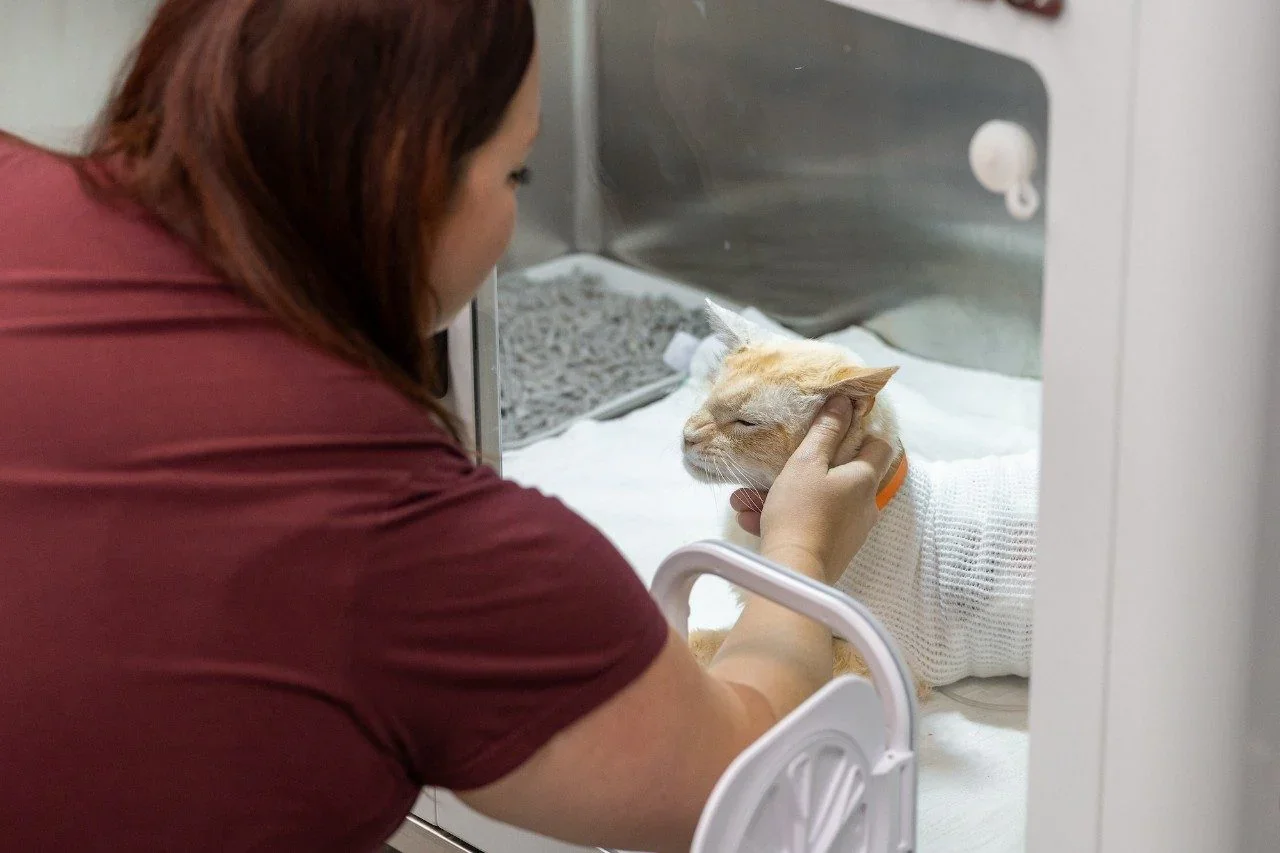
How Virginia Tech Is Using VetFlex Oxygen Cage Technology to Transform Veterinary Oxygen Care
Virginia-Maryland College of Veterinary Medicine at Virginia Tech has officially installed the VetFlex ICU oxygen cage system in their state-of-the-art Veterinary Teaching Hospital, marking a huge step forward for animal health.
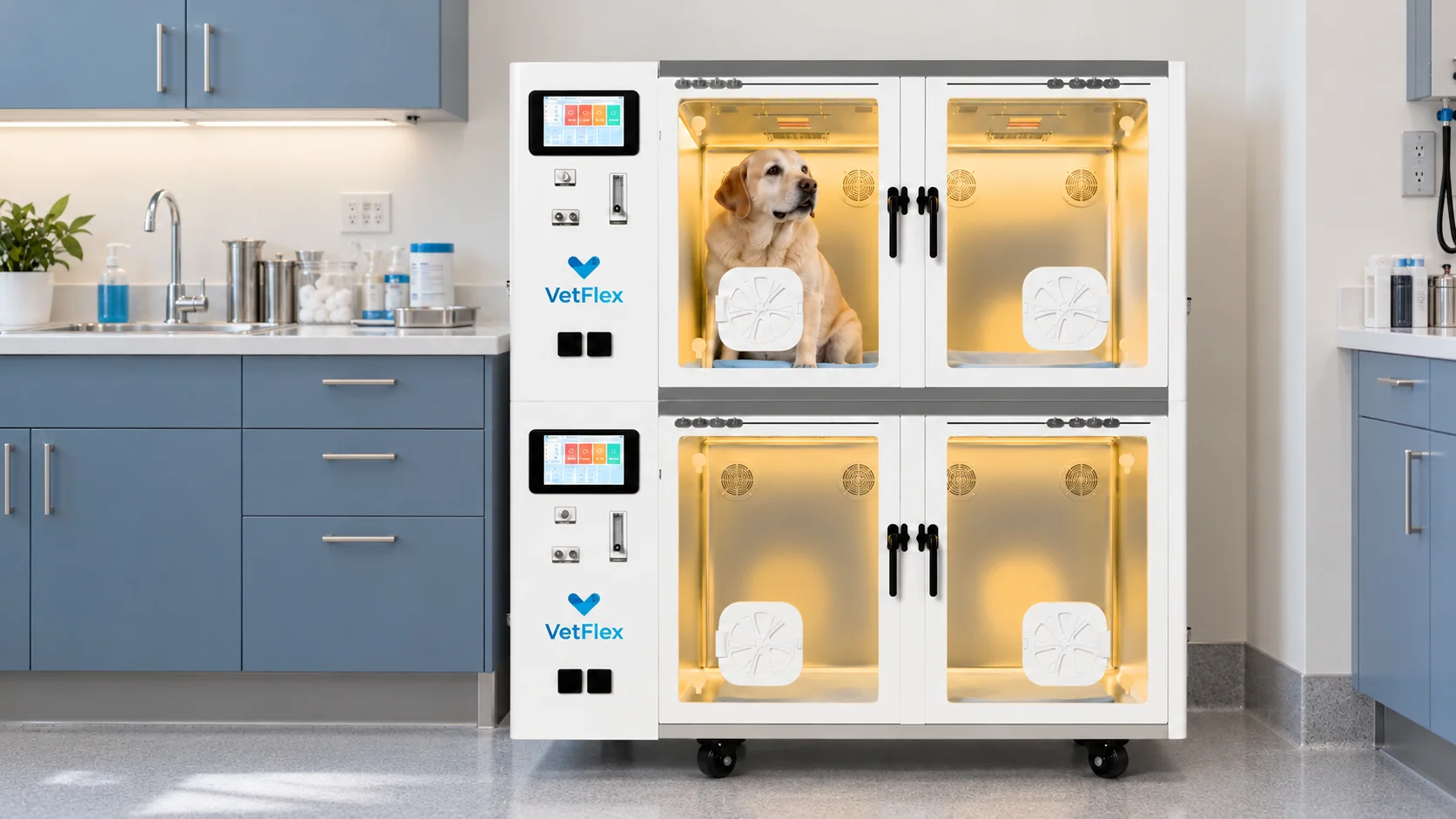
Oxygen Cages for Dogs: When to Use One, What to Set and How to Monitor
A clinical guide for veterinary teams: when a dog needs an oxygen cage, what oxygen, temperature and humidity to set, how to monitor, and how to wean a dog back to room air.
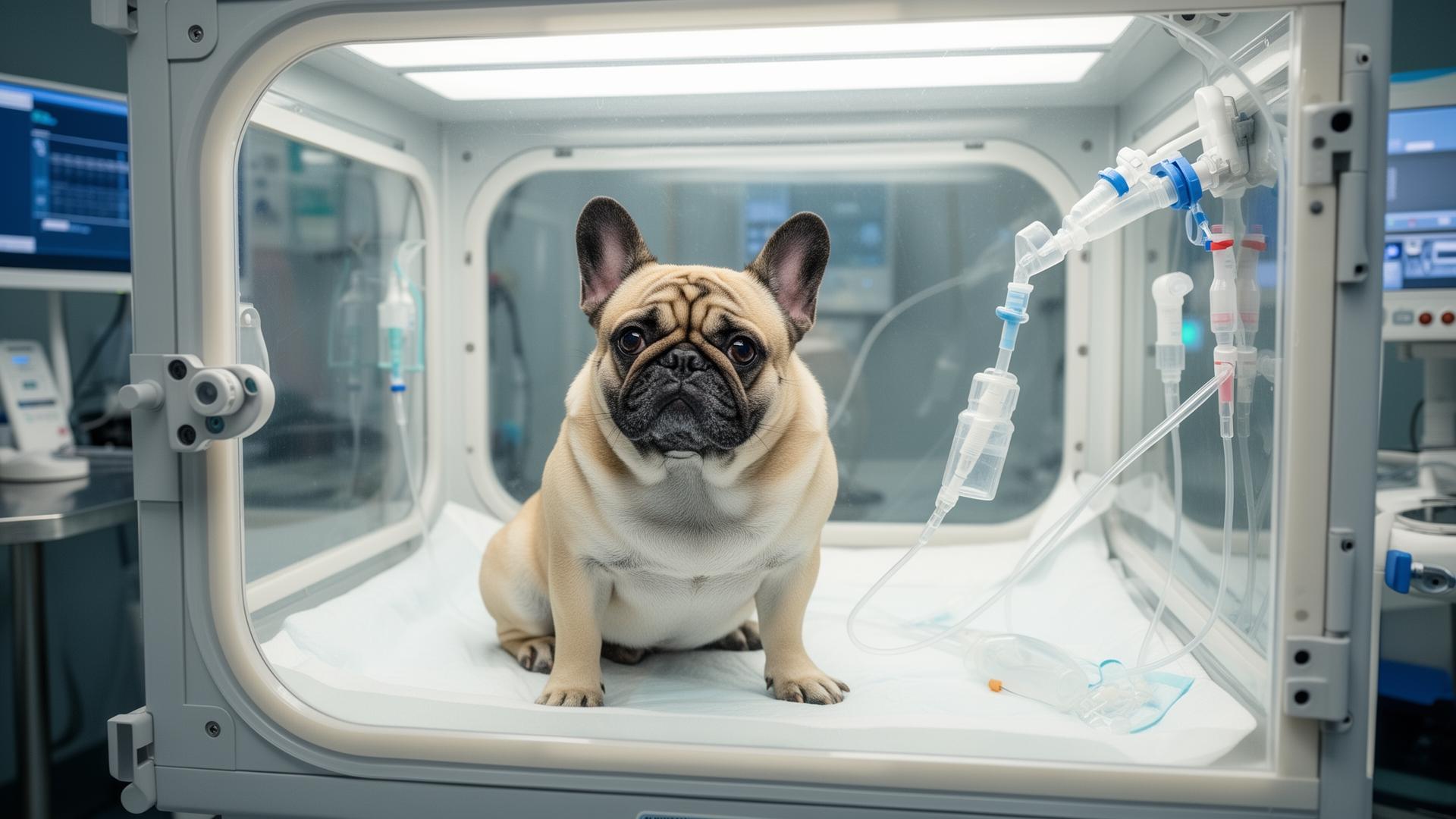
Brachycephalic Dogs and Oxygen Cages: Supporting Flat-Faced Breeds in Respiratory Distress
A clinical guide to managing brachycephalic respiratory emergencies with veterinary oxygen cages, covering BOAS pathophysiology, treatment protocols, and ICU equipment selection.