
Do Nitrile Gloves Contain Latex? What Veterinary and Healthcare Professionals Need to Know
A practical guide answering whether nitrile gloves contain latex, comparing glove materials, and explaining how biodegradable nitrile gloves offer the same protection with reduced environmental impact.
A practical guide answering whether nitrile gloves contain latex, comparing glove materials, and explaining how biodegradable nitrile gloves offer the same protection with reduced environmental impact.
Michael
Veterinary Equipment Specialists
A veterinary technician develops contact dermatitis after years of latex glove use. A new hire discloses a latex allergy during onboarding. A client reports a latex sensitivity before a procedure involving their pet. These scenarios happen daily in veterinary and healthcare settings. Latex allergies affect 4.3% of the general population and 10-17% of healthcare workers, making latex-free alternatives an operational requirement, not a preference.
The short answer: No. Nitrile gloves are 100% latex-free. They are made from synthetic nitrile butadiene rubber and contain none of the natural rubber proteins that cause latex allergies.
""
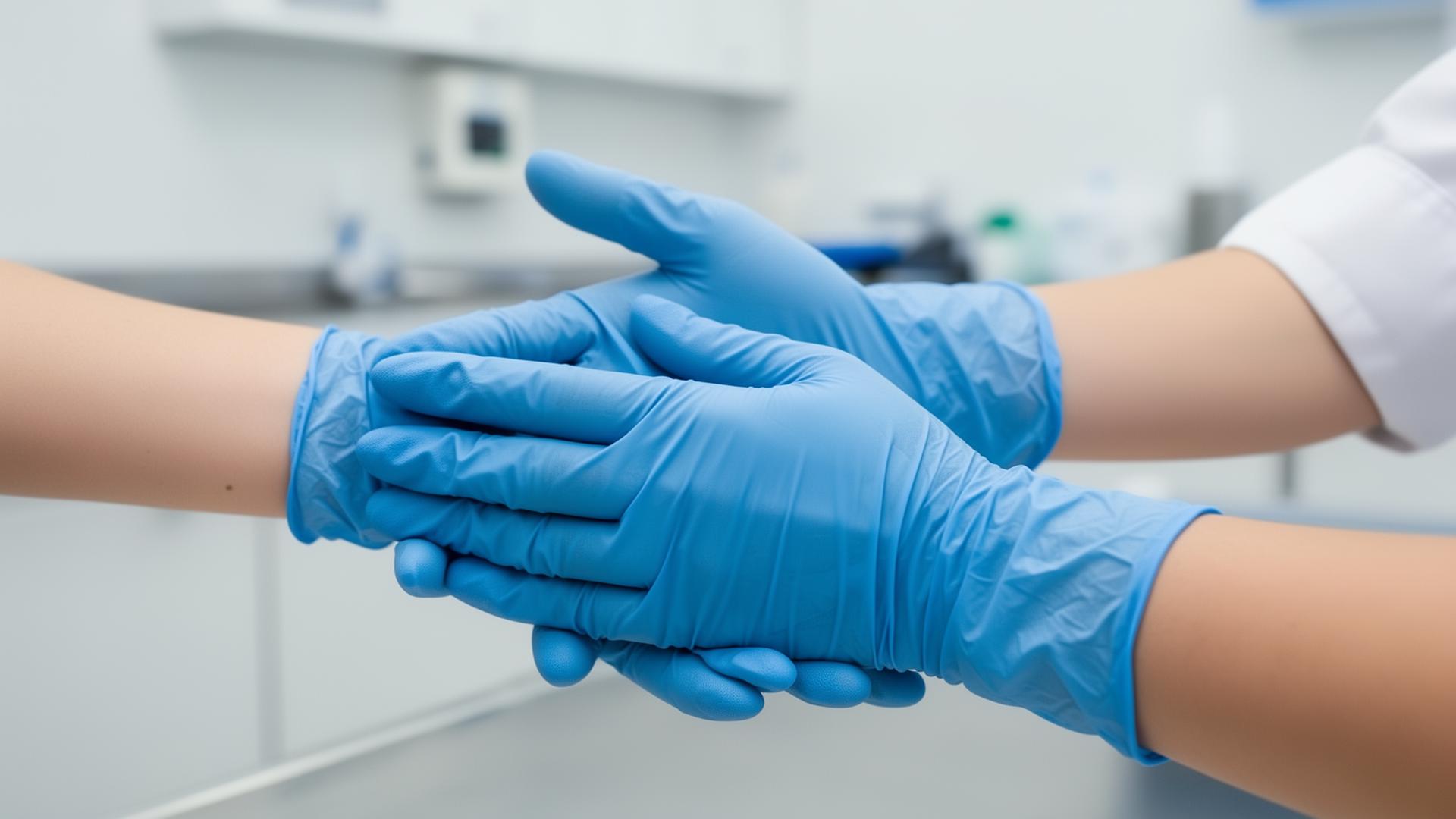
Natrle nitrile exam gloves are latex-free, biodegradable, and competitively priced for high-volume use.
Why Glove Material Selection Matters for Clinical Operations
Glove selection affects three operational areas: staff safety (allergy and sensitivity risk), clinical protection (puncture and chemical resistance), and cost (per-glove cost and waste disposal). A single latex allergy incident can result in lost work days, workers compensation claims, and the cost of transitioning an entire practice to latex-free products reactively rather than proactively.
What Are Nitrile Gloves Made Of?
Nitrile gloves are manufactured from synthetic nitrile butadiene rubber, a petroleum-based compound. Unlike latex gloves made from natural rubber containing allergy-triggering proteins, nitrile contains no natural rubber latex. This makes them a safe choice for individuals with latex allergies. Some individuals may react to chemical accelerators (carbamates or thiurams) used during manufacturing; accelerator-free nitrile options address this.
Why Clinics Are Switching to Nitrile as Their Standard Glove
- Eliminates latex allergy risk for staff and clients without sacrificing protection
- Superior puncture resistance (3x vinyl) for handling sharps, chemicals, and biological materials
- Strong chemical resistance protects against oils, solvents, and common disinfectants
- Available in biodegradable formulations that reduce landfill impact without compromising performance
- Fits across clinical, laboratory, and food handling applications, simplifying procurement
Nitrile vs. Latex vs. Vinyl: What to Look For
| Feature | Nitrile | Latex | Vinyl |
|---|---|---|---|
| Material | Synthetic rubber | Natural rubber latex | PVC |
| Latex-Free | Yes | No | Yes |
| Puncture Resistance | Excellent | Moderate | Poor |
| Chemical Resistance | Strong (oils, solvents) | Moderate | Low |
| Allergy Risk | Very low (accelerator-free options available) | High (protein allergies) | Low |
| Tactile Sensitivity | High | Highest | Low |
| Biodegradable Options | Yes (Natrle EcoDegra™) | Limited | None |
| Best For | Most clinical applications | Surgical precision (where no allergy exists) | Low-risk, short-duration tasks |
The Sustainability Factor: Biodegradable Nitrile
Traditional nitrile gloves take centuries to decompose in landfills. For high-volume users (veterinary clinics, hospitals, dental offices, emergency services), this creates a significant and growing waste stream. Biodegradable nitrile gloves incorporate organic additives that accelerate decomposition in landfill conditions while maintaining the same puncture resistance, chemical protection, and tactile sensitivity as standard nitrile.
Natrle Exam Gloves: Latex-Free, Biodegradable, Clinically Tested
Natrle exam gloves use EcoDegra™ technology to accelerate biodegradation without compromising clinical performance. They are tested for use in handling chemotherapy drugs (ASTM D6978) and are available in 200-count boxes that reduce storage footprint and reordering frequency. Natrle gloves serve veterinary clinics, human healthcare facilities, dental practices, EMT services, and law enforcement.
- 100% latex-free nitrile construction
- EcoDegra™ technology accelerates biodegradation in landfill conditions
- Tested for chemotherapy drug handling (ASTM D6978)
- 200-count boxes reduce storage space and reordering frequency
- Competitively priced for high-volume clinical use
VetFlex Green Initiative
Natrle exam gloves biodegrade significantly faster than standard nitrile in landfill conditions, without sacrificing puncture resistance or chemical protection.
Compare Natrle exam glove sizes and configurations for your practice.
Vet Trivia Challenge
Test your veterinary knowledge!
What percentage of veterinary practices are adopting sustainable equipment?
Cost and Operational Impact
Switching to nitrile does not have to increase costs. Natrle biodegradable nitrile gloves are competitively priced with standard nitrile options. The 200-count box format means more gloves per case, fewer reorders, and less storage space consumed. For practices transitioning from latex, the switch also eliminates the risk of allergy-related incidents and associated costs.
When It Makes Sense to Standardize on Nitrile
- Any staff member or regular client has a known or suspected latex sensitivity
- Your practice handles chemotherapy drugs, fentanyl, or other hazardous substances
- You want a single glove type that works across exam, lab, and cleaning applications
- Reducing clinical waste is a practice priority
- You are evaluating glove costs and want competitive pricing with sustainability benefits
Where Nitrile Gloves Are Used
Veterinary & Healthcare
Exam procedures, surgery prep, ICU cleaning, patient handling. Latex-free protection for staff and patients.
Dental Practices
Puncture-resistant protection during procedures with sharps and chemical exposure.
Emergency Services
EMT, law enforcement, and first responders require reliable barrier protection in unpredictable field conditions.
Laboratory & Industrial
Chemical splash protection, biological hazard handling, and oil/solvent resistance.
Frequently Asked Questions
Make the Switch to Protection That Does Not Compromise
Nitrile gloves are the gold standard for clinical protection across veterinary, healthcare, dental, and emergency services. With biodegradable options now available at competitive prices, the trade-off between protection and environmental responsibility no longer exists.
Request pricing for Natrle biodegradable nitrile exam gloves.
Download Product Specifications
Get Natrle Glove Pricing & Samples
Fill out the form below and our team will reach out within 24 hours.
Key Takeaways
- The short answer: No. Nitrile gloves are 100% latex-free. They are made from synthetic nitrile butadiene rubber and contain none of the natural rubber proteins that cause latex allergies.
- Why Glove Material Selection Matters for Clinical Operations
- Why Clinics Are Switching to Nitrile as Their Standard Glove
Related Decision Guides
200 Count vs 100 Count Gloves
Compare cost per glove, waste reduction, and workflow efficiency.
Read GuideICU Oxygen Cage Buying Guide
Compare features, costs, and choose the right system for your practice.
Read GuideOxygen Concentrator vs Tank vs Central
Compare oxygen delivery systems for your clinic's size and budget.
Read GuideSustainable Exam Gloves

How did you find this article?
Was this article helpful?
Your feedback helps us understand what content matters most to you.
Explore More Clinical Resources
Sustainable Veterinary Practices Hub
Sustainability in veterinary medicine is evolving rapidly. From biodegradable exam gloves to soda lime-free ICU systems, veterinary hospitals have growing options to reduce their environmental footprint.
Explore this topicVeterinary Gloves Knowledge Center
Choosing the right gloves impacts infection control, tactile sensitivity, and environmental responsibility. This hub covers exam gloves, surgical gloves, and sustainable options.
Explore this topicRelated Clinical Insights

Why Soda Lime-Free Oxygen Cages Are the Future of Veterinary Care
Veterinary medicine is advancing rapidly, with an emphasis on technologies that enhance patient outcomes while reducing operational challenges. One of the most transformative innovations is the soda lime-free oxygen cage system.

Beyond Green: How Veterinary Clinics Save Money Through Sustainable Equipment
A financial analysis of how soda lime-free ICU systems and sustainable veterinary equipment reduce operating costs while improving patient care and environmental impact.

Sustainable Practices in Veterinary Medicine: Cut Costs While Reducing Waste
A practical guide to sustainable veterinary practices that reduce operating costs, covering soda lime-free ICU technology, biodegradable exam gloves, energy efficiency, and waste reduction.
Browse the VetFlex Knowledge Center
Explore comprehensive clinical resource hubs curated for veterinary professionals.
Veterinary Oxygen Therapy Resource Hub
Oxygen therapy is a cornerstone of veterinary critical care. Whether managing post-surgical recovery, respiratory distress, or chronic conditions, understanding oxygen delivery systems and best practices helps veterinary teams provide better patient outcomes.
Veterinary ICU Cage Systems Resource Hub
Modern veterinary ICU cage systems play a critical role in patient recovery. From oxygen delivery to temperature control, the right ICU environment significantly affects outcomes.
Veterinary Gloves Resource Hub
Choosing the right gloves impacts infection control, tactile sensitivity, and environmental responsibility. This hub covers exam gloves, surgical gloves, and sustainable options.
Sustainable Veterinary Practices Resource Hub
Sustainability in veterinary medicine is evolving rapidly. From biodegradable exam gloves to soda lime-free ICU systems, veterinary hospitals have growing options to reduce their environmental footprint.
What You'll Learn
- Why Glove Material Selection Matters for Clinical Operations
- What Are Nitrile Gloves Made Of?
- Why Clinics Are Switching to Nitrile as Their Standard Glove
- Nitrile vs. Latex vs. Vinyl: What to Look For
Trending Topics
Most Popular
How Veterinary Oxygen Delivery Systems Work
Oxygen Concentrator vs Tank: Cost Comparison for Veterinary Hospitals
Optimizing the Veterinary ICU: Avoiding Common Setup Mistakes
Optimizing Patient Recovery: How Modern Veterinary ICU Oxygen Cages Work
How to Choose the Right Veterinary Oxygen Cage for Your Practice
Get The Flex
Veterinary insights, product updates, and Natrle news—delivered to your inbox.
