
200 vs 100 Count Nitrile Gloves: Which Is Better for Clinics?
A comparison of 200-count and 100-count nitrile exam glove boxes, and how box size affects storage space, packaging waste, and how easily your team can order and manage supplies.
VetFlex Editorial Team
Veterinary Equipment Specialists
Choosing the right box size for your nitrile exam gloves is more than a matter of convenience. It affects how much shelf space your supplies take up, how much packaging waste your practice generates, how often staff restock, and how much your purchasing team has to reorder. For veterinary clinics and other busy healthcare settings, the choice between 200-count and 100-count boxes of nitrile gloves has real day-to-day implications. This article compares the two so you can decide which fits your practice, with an honest look at what actually changes when you size up, and what doesn't.
Understanding the Core Difference: 100-Count vs. 200-Count Nitrile Exam Gloves
What Doesn't Change: Your Price Per Glove
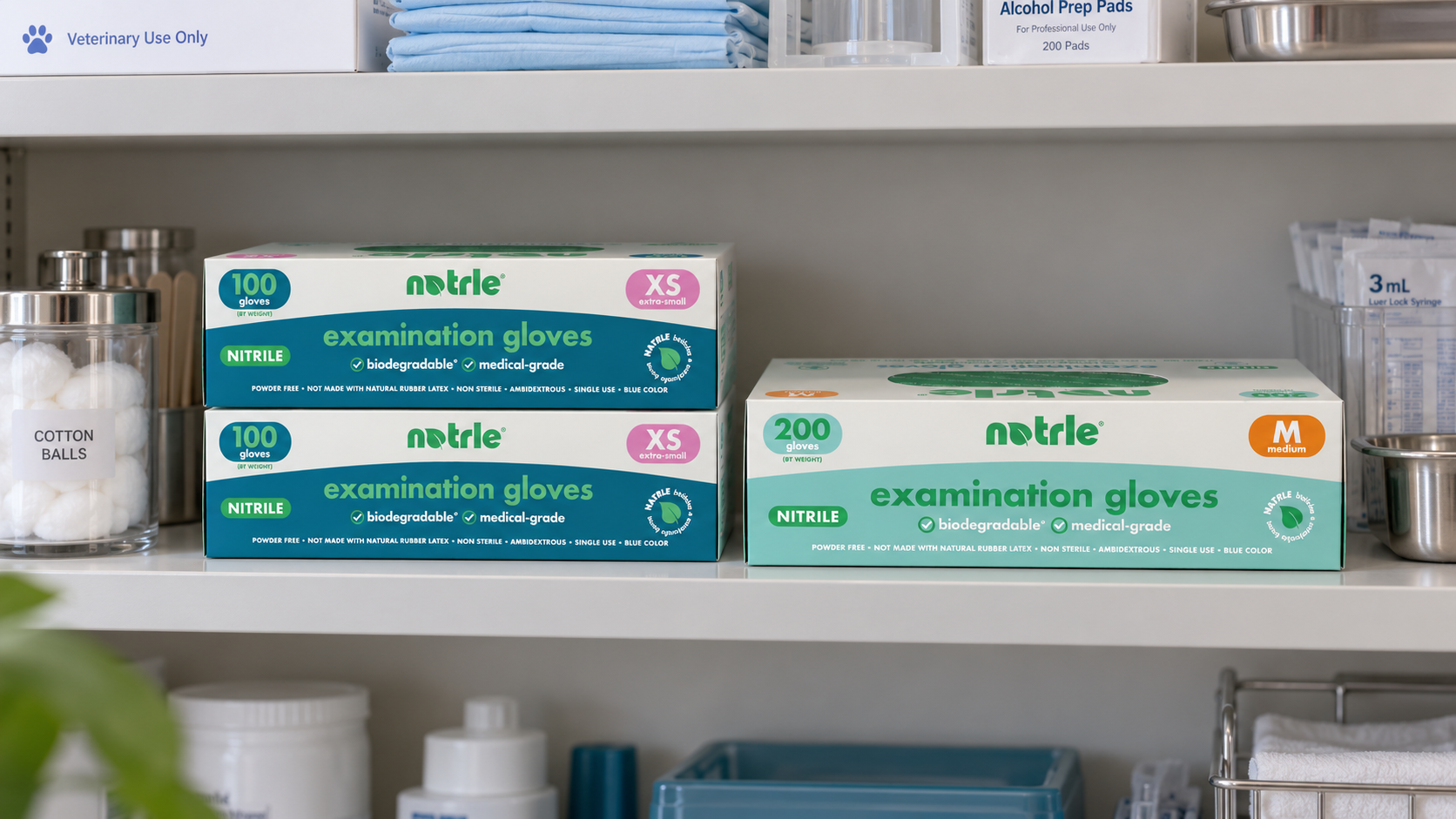
It's easy to assume a 200-count box gives you a lower price per glove. In practice, that's usually not the case. A box or case is typically priced at the same per-glove rate no matter the count. Natrle gloves, for example, cost the same per glove whether you buy a 100-count box, a 200-count box, or a full case, so sizing up doesn't lower your unit cost. That means the real reasons to choose a 200-count box aren't about price per glove at all. They're about space, packaging, and how easy your supplies are to order and manage, which we break down below.
Operational Impact: Storage, Waste, and Efficiency
Beyond the purchase price, the choice between 100-count and 200-count boxes of nitrile exam gloves affects daily operations in several ways. These factors matter for veterinary clinics, dental practices, and emergency medical services where space and quick access are at a premium.
Storage Efficiency
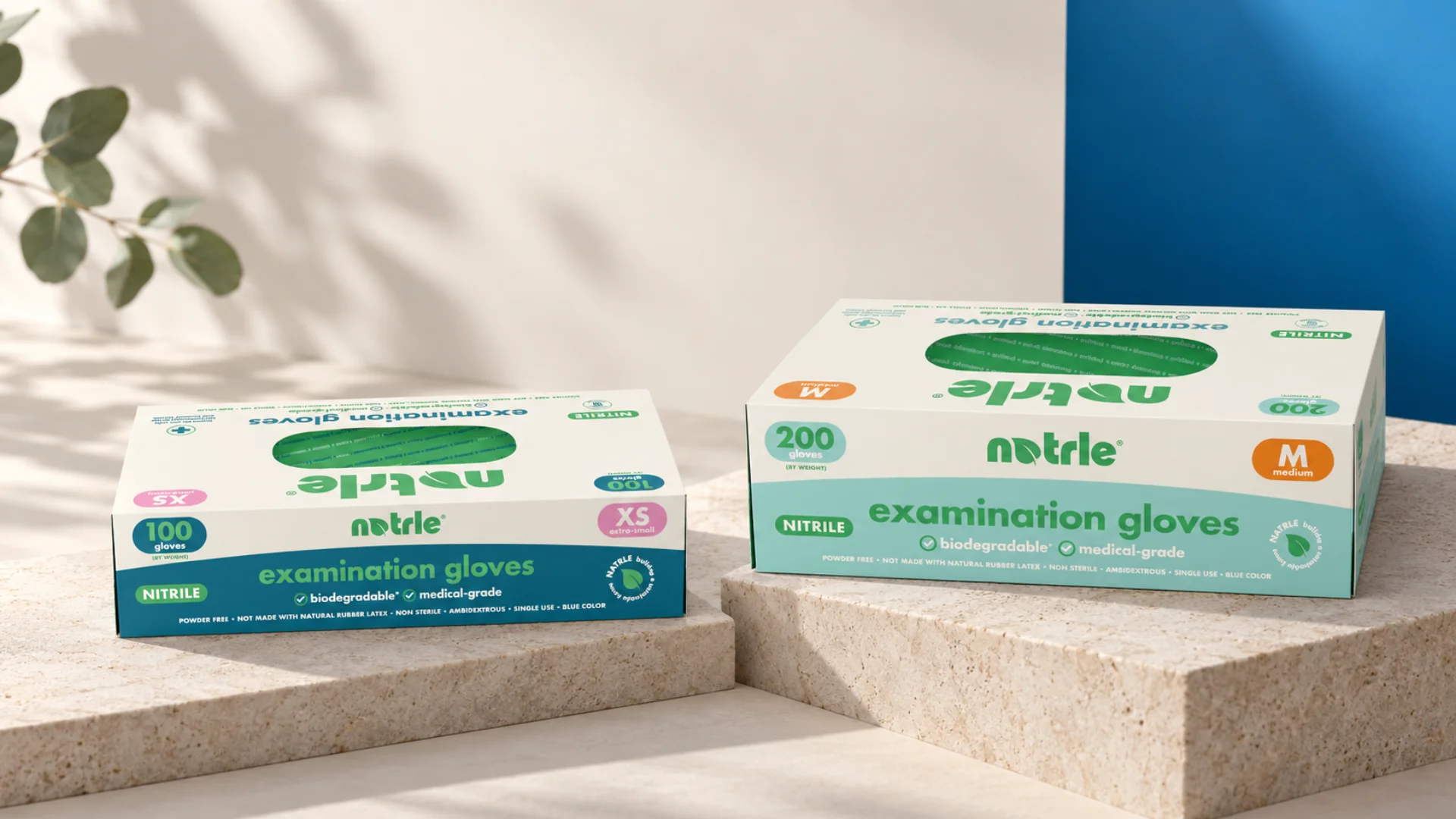
Most veterinary hospitals don't have unlimited storage, and glove boxes compete for the same shelves, drawers, and closets as everything else. According to Natrle's packaging specifications, a 100-count inner box measures 245 x 125 x 48 mm (about 1.5 liters) and a 200-count box measures 245 x 128 x 79 mm (about 2.5 liters). The two share the same shelf footprint; the 200-count box simply stands a little taller, so it holds twice the gloves without claiming a second slot. Stock 1,000 gloves in 100-count boxes and you fill ten boxes, roughly 14.7 liters of packaging. The same 1,000 gloves fit in five 200-count boxes, about 12.4 liters. That is half the boxes to buy, store, open, and track, and roughly 16% less box volume for the same glove count, across every size and every room that keeps gloves on hand.
Waste Reduction
Fewer, larger boxes also mean less cardboard. Every 1,000 gloves you move from 100-count to 200-count boxes takes you from ten boxes to five, pulling five cardboard boxes out of your waste stream. Buying by the case compounds it: one 200-count case (VFBD2003, 401 x 269 x 260 mm) carries 2,000 gloves, while matching that with 100-count cases (VFBD1001, 258 x 250 x 255 mm) takes two. That is half the cases to break down, about 15% less case volume, and roughly 16% less shelf footprint for the same 2,000 gloves. Over a year of steady use, that adds up to a real drop in the packaging your team handles and discards, which supports both a tidier supply area and your practice's sustainability goals.
Restocking Frequency
Fewer boxes also mean less frequent restocking. Staff swap out boxes and refill dispensers less often, so there's less interruption to the workflow and more time focused on patient care. In a busy clinic or emergency setting, cutting down on small administrative tasks like restocking is a simple, practical win.
Simpler Purchasing and Inventory
Larger boxes and cases also mean less ordering for whoever manages purchasing. Because a 100-count box holds half as many gloves, ordering that size means buying and receiving twice as many boxes to cover the same usage. Fewer, less frequent reorders make it easier to keep par levels accurate, see what's on hand at a glance, and prevent both stockouts and overstock. For a practice manager or inventory lead juggling dozens of SKUs, standardizing on 200-count boxes and cases is one less item to reorder every week and one less thing to track.
| Feature | 100-Count | 200-Count |
|---|---|---|
| Price per glove | Same | Same |
| Inner box size | 245 x 125 x 48 mm (~1.5 L) | 245 x 128 x 79 mm (~2.5 L) |
| Boxes for 1,000 gloves | 10 boxes (~14.7 L) | 5 boxes (~12.4 L) |
| Cases for 2,000 gloves | 2 cases (VFBD1001) | 1 case (VFBD2003) |
| Shelf footprint per 2,000 gloves | ~0.13 m2 | ~0.11 m2 (~16% less) |
| Cardboard and packaging waste | Higher (twice the boxes) | Lower (half the boxes) |
| Restocking and ordering | More frequent, more to track | Less frequent, easier to manage |
| Ideal for | Low-volume users or very tight, non-standard spaces | General clinic use and high-volume practices |
So Where Do the Savings Come From?
Since the per-glove price is the same, moving to 200-count boxes won't cut your unit cost, and it's worth being upfront about that. The savings are indirect but real: less storage space taken up across your practice, less cardboard to handle and dispose of, fewer restocking interruptions, and less frequent ordering that keeps inventory easier to maintain. For a high-volume practice, those operational gains are why most clinics standardize on the larger box and buy by the case.
Why the 200-Count Option Isn't a Given, and Why Natrle Offers It
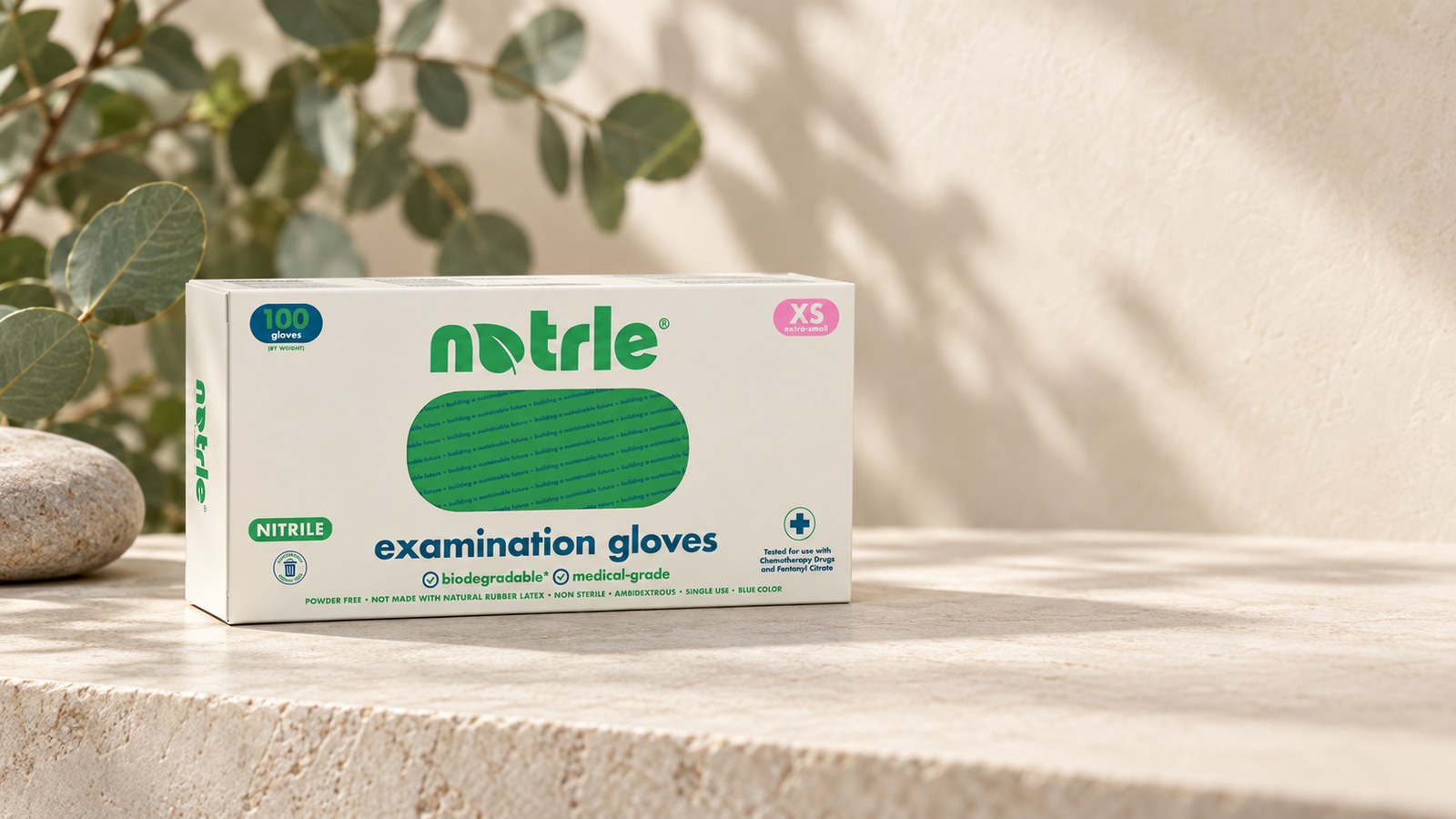
Here's a practical catch: many glove suppliers only sell 100-count boxes, so clinics that want the space and ordering advantages of a larger box simply can't get them. [Natrle biodegradable nitrile gloves](/natrle) are available in 200-count boxes and full cases, so you're not forced into the smaller size. Just as important, Natrle comes in a complete XS-XL range, including XS, which many brands skip. That matters in practices where staff hand sizes vary widely. An XS that actually fits means better dexterity, fewer torn gloves, and less waste than asking someone to make do with a small. Being able to standardize on one brand, in the box size and the full range of sizes your team needs, keeps purchasing simple.
Beyond Veterinary: Cross-Industry Applications of Nitrile Exam Gloves
While our focus often leans toward veterinary exam gloves, the principles of glove packaging and efficiency apply across many professional sectors. Nitrile exam gloves are indispensable in numerous fields thanks to their durability, chemical resistance, and protection against pathogens. Understanding their broad utility helps in making informed purchasing decisions.
Human Healthcare and Dental Offices
In hospitals, clinics, and dental practices, sterile environments and patient safety are paramount. Nitrile exam gloves are the standard for examinations, minor procedures, and handling contaminated materials. The benefits of 200-count boxes (reduced restocking, less packaging waste, and simpler ordering) are equally relevant here, contributing to smoother operations.
EMT and First Responders
Emergency medical technicians and first responders need reliable hand protection in unpredictable and often hazardous situations. Bulk nitrile gloves ensure supplies are readily available, and the compact nature of 200-count boxes can be an advantage in the limited storage of ambulances or emergency kits. The robust barrier protection of nitrile is critical for these professionals.
Law Enforcement and Laboratory Settings
Law enforcement personnel use nitrile exam gloves for evidence collection, handling hazardous substances, and interactions where exposure to biological fluids is possible. Laboratories similarly rely on nitrile for chemical resistance and contamination control. In both settings, the space and packaging efficiency of 200-count boxes is valued.
Common Mistakes When Ordering Nitrile Exam Gloves
Even with the best intentions, clinics and other facilities can make common errors when ordering nitrile exam gloves that lead to inefficiencies or unnecessary costs. Steering clear of these pitfalls can meaningfully improve your supply management.
- Assuming a bigger box means a lower price per glove. It's usually the same.
- Ordering 100-count out of habit and doubling the number of boxes you buy, store, and track.
- Underestimating how much storage space bulk orders need.
- Overlooking the packaging waste created by lots of small boxes.
- Choosing a brand that doesn't stock a full XS-XL size range, leaving some staff without a proper fit.
- Ordering inconsistent sizes, leading to excess inventory of less-used items.
When to Choose 100-Count vs. 200-Count Boxes
While 200-count boxes suit most practices, there are specific scenarios where 100-count boxes still make sense.
Choose 200-Count Nitrile Exam Gloves If:
- You have high glove usage (busy multi-doctor veterinary clinic, hospital, or large dental practice).
- Storage space is tight and you want to reclaim shelf and drawer room.
- You want to cut down on cardboard and packaging waste.
- You want to restock less often and reduce the labor around it.
- You want to place orders less frequently and keep inventory simpler to manage.
Choose 100-Count Nitrile Exam Gloves If:
- You have very low glove usage (a small, specialized practice with infrequent glove needs).
- You have extremely limited, non-standard storage where a smaller box footprint is essential.
- You are testing a new glove brand or size and prefer a smaller initial commitment.
Chemo and Fentanyl Safety Considerations for Nitrile Thickness
When selecting nitrile exam gloves, especially for veterinary or human healthcare, it's important to consider safety requirements beyond count per box. For handling hazardous drugs like chemotherapy agents or potent opioids such as fentanyl, glove thickness and material integrity are critical. While all nitrile gloves provide a protective barrier, some are specifically tested and rated for chemotherapy drug permeation. Consult the manufacturer's data for permeation times and confirm the gloves meet ASTM D6978 standards for chemotherapy drug resistance if that applies to your practice. Thicker nitrile generally offers extended protection, but always verify specific ratings, and remember that no glove protects indefinitely, so proper glove-changing protocols remain essential. For more on glove materials and allergy considerations, see our guides on [whether nitrile gloves contain latex](/blogs/vetflex-vitals/do-nitrile-gloves-contain-latex) and [latex allergy and glove selection](/blogs/vetflex-vitals/latex-allergy-veterinary-clinics-glove-selection).
Frequently Asked Questions About Nitrile Exam Gloves
Are 200-count nitrile exam gloves more cost-effective than 100-count?
Do all suppliers offer 200-count nitrile glove boxes?
Do biodegradable nitrile gloves offer the same protection as traditional nitrile?
Can 200-count boxes fit in standard glove dispensers?
What are the environmental benefits of biodegradable nitrile gloves?
Are nitrile exam gloves safe for handling chemotherapy drugs or fentanyl?
Choosing between 100-count and 200-count nitrile exam gloves isn't really about unit price. It's about how your supplies fit your space and your workflow. Sizing up to 200-count boxes, and buying by the case, takes up less room in the hospital, cuts down on cardboard waste, means fewer restocks, and gives whoever handles purchasing less to reorder and track. The catch is that not every supplier offers 200-count boxes or a full size range. Natrle offers both, in sizes XS through XL. When you're ready, take a look at [Natrle biodegradable nitrile exam gloves](/natrle) for your clinic.
Fewer boxes, less storage, and every size your team needs. Standardize your clinic on Natrle biodegradable nitrile exam gloves, available in 100- and 200-count boxes, full cases, and sizes XS through XL.
Shop Natrle Exam GlovesDownload Product Specifications
Get Natrle Glove Pricing & Samples
Fill out the form below and our team will reach out within 24 hours.
Related Decision Guides
200 Count vs 100 Count Gloves
Compare box changes, storage footprint, waste reduction, and workflow efficiency.
Read GuideICU Oxygen Cage Buying Guide
Compare features, costs, and choose the right system for your practice.
Read GuideOxygen Concentrator vs Tank vs Central
Compare oxygen delivery systems for your clinic's size and budget.
Read GuideSustainable Exam Gloves
How did you find this article?
Was this article helpful?
Your feedback helps us understand what content matters most to you.
Related Clinical Insights
Latex Allergy in Veterinary Clinics: Staff Safety and Glove Selection
This article explores the composition of nitrile gloves, clarifying whether they contain latex and detailing the implications for veterinary clinics. We discuss allergy management, the benefits of biodegradable nitrile gloves, and the specific applications for sterile latex surgical gloves.

Do Nitrile Gloves Contain Latex? What Veterinary and Healthcare Professionals Need to Know
A practical guide answering whether nitrile gloves contain latex, comparing glove materials, and explaining how biodegradable nitrile gloves offer the same protection with reduced environmental impact.

Veterinary Oxygen Supply Options: Concentrator, Central, and Tank Guide
A decision-making guide comparing veterinary oxygen concentrators, centralized oxygen systems, and tanks based on cost, capacity, safety, and clinical workflow.