
Oxygen Concentrator vs Tank: Cost Comparison for Veterinary Hospitals
Compare oxygen concentrators, tanks, and central supply systems for veterinary hospitals. Evaluate true cost of ownership, reliability, maintenance requirements, and clinical workflow to choose the right oxygen infrastructure.
VetFlex Team
Veterinary Equipment Specialists
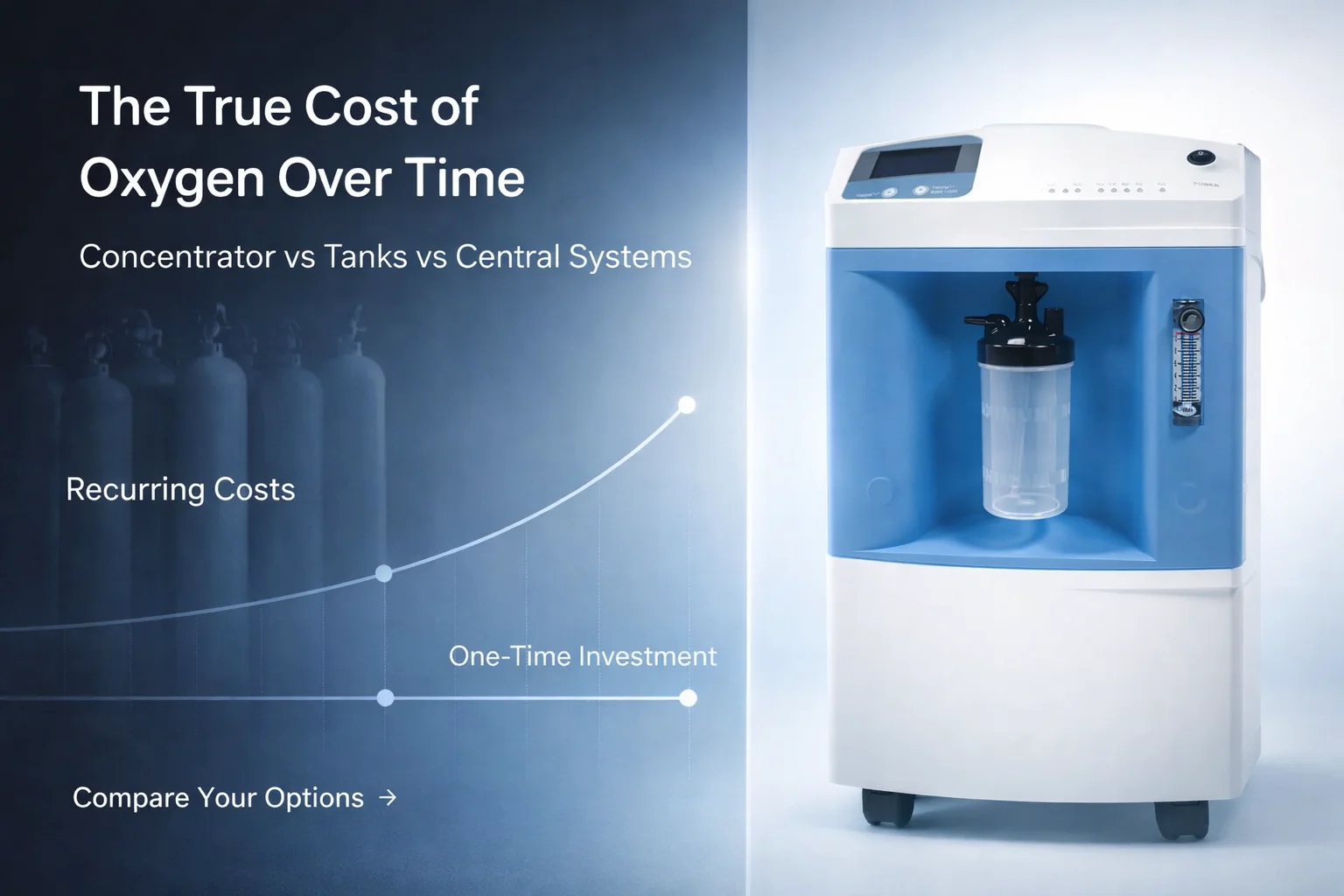
Veterinary hospitals spend thousands of dollars each year on oxygen infrastructure without ever comparing the true cost of ownership. Whether you are evaluating your first oxygen system or replacing an aging setup, the decision between an oxygen concentrator, compressed gas tanks, and central oxygen piping will directly impact your operating costs, clinical workflow, and patient care quality for years to come.
Quick Answer: Which Oxygen System Should You Use?
For most veterinary hospitals, the answer is straightforward:
- **Best for most hospitals** → Oxygen Concentrator. On-demand oxygen production with no recurring delivery fees, no supply chain dependency, and predictable long-term costs.
- **Best backup system** → Oxygen Tanks. Keep a small E or H cylinder on hand for power outages or temporary high-flow anesthesia needs.
- **Best for large multi-suite facilities** → Central Oxygen Systems. Purpose-built for hospitals running 4+ simultaneous surgical cases with high-volume demand.
Most general practice and emergency veterinary hospitals will get the best combination of cost efficiency, reliability, and clinical flexibility from an oxygen concentrator paired with a small backup tank.
Why Veterinary Hospitals Are Reevaluating Their Oxygen Supply
Oxygen is a nonnegotiable clinical resource in veterinary medicine. From stabilizing dyspneic patients to maintaining safe FiO2 levels during anesthesia recovery, the method of delivery matters as much as the oxygen itself. Yet many hospitals continue using legacy systems without considering how much they actually spend on tank rentals, emergency refills, and staff time managing deliveries.
The shift toward oxygen concentrators has accelerated as clinics recognize the operational burden of tank-based systems. Delivery scheduling, storage space for large cylinders, safety protocols for high-pressure compressed gas, and the risk of running out during emergencies are all factors driving this transition.
Did You Know?
Fun veterinary facts
A standard H-tank contains approximately 7,000 liters of oxygen, but at a high flow rate of 10 to 15 LPM, it can be depleted in under 8 hours.
Oxygen Concentrator vs Tank vs Central: Full Comparison
| Feature | Oxygen Concentrator | Compressed Gas Tanks | Central Oxygen System |
|---|---|---|---|
| Upfront Cost | Moderate (one-time purchase) | Low (rental or purchase) | High (infrastructure installation) |
| Recurring Cost | Electricity only (estimated $15 to $25/mo) | $300 to $500+/mo delivery fees (estimated) | Bulk refill + annual maintenance contracts |
| Oxygen Purity | 93% to 95% (clinically sufficient for ICU) | 99%+ USP grade | 99%+ USP grade |
| Maintenance | Periodic filter replacement | Regulator checks, valve inspections | Professional annual servicing required |
| Noise Level | ~50 dB (quiet conversation) | Silent (passive storage) | Silent at point of use |
| Reliability | On-demand, no supply dependency | Finite supply, requires scheduling | Highly reliable with proper maintenance |
| Emergency Readiness | Always available when powered | Risk of depletion during high usage | Continuous supply from bulk storage |
| Space Required | Compact portable unit | Secure storage area for cylinders | Dedicated mechanical room + plumbing |
| Scalability | Add additional units as needed | Add more cylinders (more logistics) | Requires infrastructure upgrades |
| Best Use Case | ICU, recovery, emergency stabilization | Backup, anesthesia, temporary high-flow | Large multi-suite hospitals |
Cost Comparison: What Veterinary Hospitals Actually Spend
The true cost of an oxygen system extends far beyond the initial purchase price. Tank-based systems appear affordable upfront but accumulate significant expense through recurring delivery fees, emergency refill charges, and staff time spent coordinating logistics.
| Cost Category | Tank System (5-Year Est.) | Concentrator (5-Year Est.) |
|---|---|---|
| Equipment / Rental | $3,000 | $2,500 |
| Delivery & Refill Fees | $18,000+ | $0 |
| Emergency Refills | $3,000+ | $0 |
| Electricity | $0 | $1,500 |
| Maintenance | $500 | $500 |
| Estimated 5-Year Total | $24,500+ | $4,500 |
Central oxygen systems have a different cost profile. Installation costs can range from $15,000 to $50,000+ depending on facility size, with annual maintenance contracts adding $2,000 to $5,000 per year. For large hospitals running multiple surgical suites simultaneously, this investment may be justified. For most general practice and emergency clinics, a concentrator delivers equivalent clinical value at a fraction of the long-term cost.
""
See how VetFlex ICU systems integrate with oxygen concentrators for seamless oxygen delivery.
When Each System Makes Sense
When to Use an Oxygen Concentrator
- General practice clinics adding ICU or oxygen therapy capability
- Emergency hospitals requiring 24/7 oxygen availability without delivery dependency
- Clinics currently spending $300+ per month on tank deliveries
- Practices in remote areas where delivery schedules are unreliable
- Hospitals seeking predictable, fixed operating costs for oxygen supply
When to Use Oxygen Tanks
- As a backup oxygen source during power outages
- For high-flow anesthesia delivery requiring 99%+ purity
- Low-volume clinics with infrequent oxygen needs
- Temporary oxygen supplementation during facility transitions
When to Use Central Oxygen
- Large multi-suite veterinary hospitals with 4+ simultaneous surgical cases
- Teaching hospitals and university veterinary programs
- Facilities with existing central infrastructure already installed
- High-volume referral centers with dedicated engineering support
Central oxygen systems remain the right choice for large-scale facilities where the volume of simultaneous oxygen demand justifies the infrastructure investment. For the majority of veterinary hospitals, however, a concentrator paired with a backup tank provides the best balance of cost, reliability, and clinical flexibility.
Integrating Oxygen Delivery with ICU Systems
Vet Trivia Challenge
Test your veterinary knowledge!
What percentage of veterinary practices are adopting sustainable equipment?
Oxygen delivery is only as effective as the environment in which it is administered. Modern ICU systems like the VetFlex AERAFLOW eliminate the need for soda lime canisters by using continuous air exchange to manage CO2. This means clinics can pair a concentrator directly with an ICU cage for a complete, maintenance-light oxygen therapy setup.
This combination removes two of the most common pain points in veterinary oxygen management: recurring tank delivery logistics and recurring soda lime canister replacement. The result is a streamlined workflow where technicians focus on patient monitoring instead of equipment maintenance.
Common Mistakes When Choosing an Oxygen System
- **Focusing only on monthly rental cost.** Tank rentals appear affordable per month but accumulate to $18,000 or more over five years in delivery fees alone (estimated).
- **Underestimating emergency refill costs.** After-hours or urgent refills often carry premium charges not reflected in standard monthly quotes.
- **Ignoring workflow disruption.** Tank deliveries require staff coordination, storage management, and inventory tracking that pull attention from patient care.
- **Not planning for growth.** Tank-based systems become increasingly expensive as patient volume grows. Concentrators scale more efficiently.
- **Assuming central oxygen is necessary.** Many hospitals install central systems when a concentrator would serve their actual volume at a fraction of the cost.
Frequently Asked Questions
Is an oxygen concentrator better than a tank for veterinary use?
Can a concentrator replace central oxygen in a veterinary hospital?
What is the most cost-effective oxygen system for veterinary hospitals?
How loud is an oxygen concentrator?
Do I need a backup oxygen source with a concentrator?
What flow rate do I need for veterinary ICU use?
Next Steps
If your hospital is spending $300 or more per month on oxygen tank delivery, experiencing supply disruptions, or adding ICU capability, an oxygen concentrator is likely the most practical and cost-effective path forward.
Explore VetFlex ICU solutions built for oxygen concentrators.
View the VetFlex 10LPM Oxygen Concentrator specifications and pricing.
Download Product Specifications
Get Oxygen Equipment Pricing
Fill out the form below and our team will reach out within 24 hours.
Related Decision Guides
Oxygen Concentrator vs Tank vs Central
Compare oxygen delivery systems for your clinic's size and budget.
Read GuideICU Oxygen Cage Buying Guide
Compare features, costs, and choose the right system for your practice.
Read GuideBest Veterinary Oxygen Cage
Evaluate features, monitoring, and cost of ownership across systems.
Read GuideICU & Critical Care Equipment
How did you find this article?
Was this article helpful?
Your feedback helps us understand what content matters most to you.
Related Clinical Insights

Veterinary Oxygen Supply Options: Concentrator, Central, and Tank Guide
A decision-making guide comparing veterinary oxygen concentrators, centralized oxygen systems, and tanks based on cost, capacity, safety, and clinical workflow.
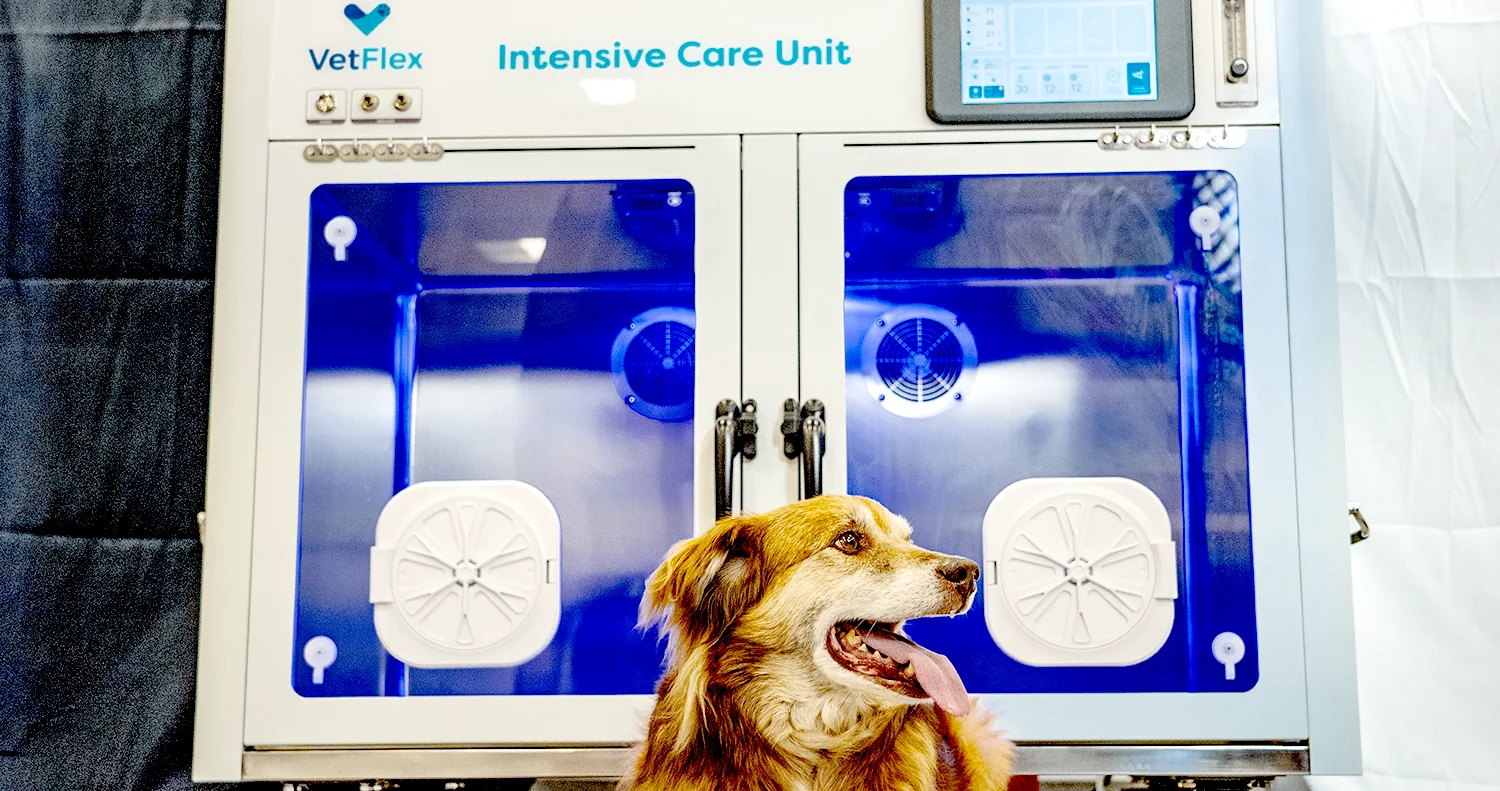
How Veterinary Oxygen Delivery Systems Work
This article provides a comprehensive overview of veterinary oxygen delivery systems, detailing the mechanisms, applications, and operational considerations for tanks, concentrators, and central oxygen lines.
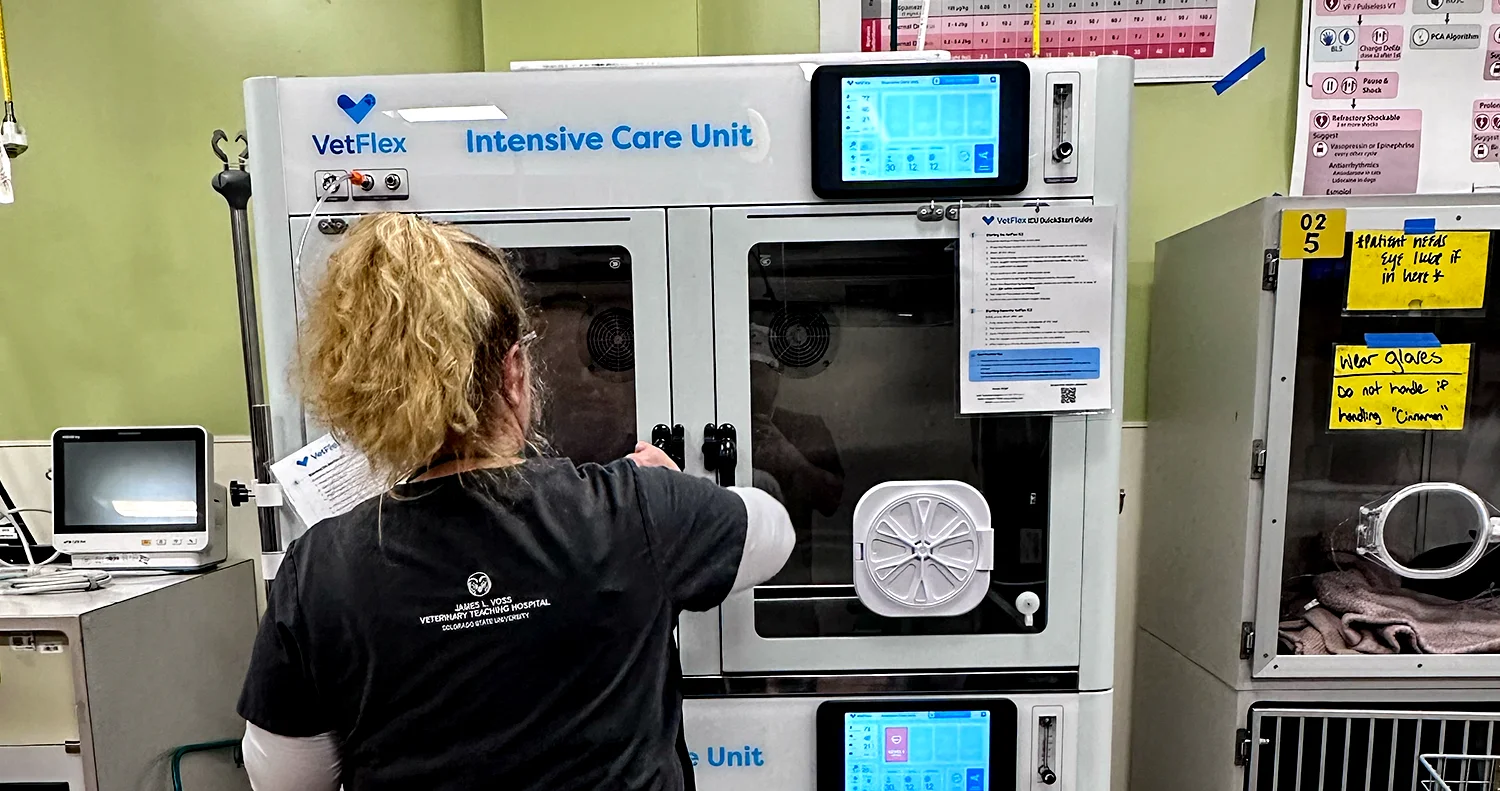
Optimizing the Veterinary ICU: Avoiding Common Setup Mistakes
This article provides a comprehensive guide to avoiding common mistakes in veterinary ICU setup, covering layout, equipment selection, workflow optimization, and staff training for optimal patient outcomes.
Browse the VetFlex Knowledge Center
Explore comprehensive clinical resource hubs curated for veterinary professionals.
Veterinary Oxygen Therapy Resource Hub
Oxygen therapy is a cornerstone of veterinary critical care. Whether managing post-surgical recovery, respiratory distress, or chronic conditions, understanding oxygen delivery systems and best practices helps veterinary teams provide better patient outcomes.
Veterinary ICU Cage Systems Resource Hub
Modern veterinary ICU cage systems play a critical role in patient recovery. From oxygen delivery to temperature control, the right ICU environment significantly affects outcomes.
Veterinary Gloves Resource Hub
Choosing the right gloves impacts infection control, tactile sensitivity, and environmental responsibility. This hub covers exam gloves, surgical gloves, and sustainable options.
Sustainable Veterinary Practices Resource Hub
Sustainability in veterinary medicine is evolving rapidly. From biodegradable exam gloves to soda lime-free ICU systems, veterinary hospitals have growing options to reduce their environmental footprint.
What You'll Learn
- Compare oxygen concentrators, tanks, and central supply systems for veterinary hospitals
- Evaluate true cost of ownership, reliability, maintenance requirements, and clinical workflow to choose the right oxygen infrastructure
Trending Topics
Most Popular
How Veterinary Oxygen Delivery Systems Work
Oxygen Concentrator vs Tank: Cost Comparison for Veterinary Hospitals
Optimizing the Veterinary ICU: Avoiding Common Setup Mistakes
Optimizing Patient Recovery: How Modern Veterinary ICU Oxygen Cages Work
How to Choose the Right Veterinary Oxygen Cage for Your Practice
Get The Flex
Veterinary insights, product updates, and Natrle news—delivered to your inbox.
