
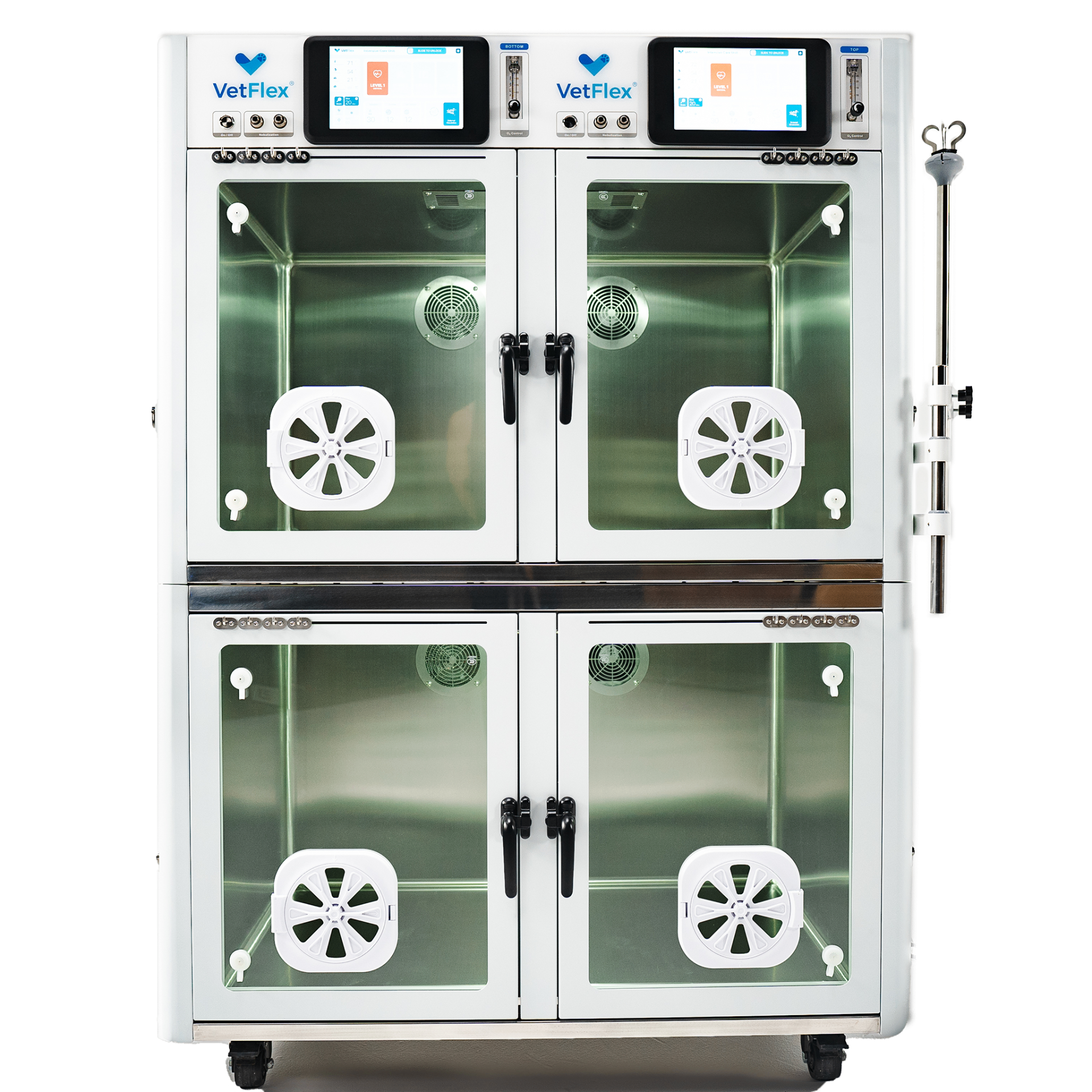
Most clinics evaluating ICU oxygen cage systems are balancing upfront cost vs. long term operational efficiency. The right decision depends on understanding total cost of ownership, not just the purchase price. Over a typical lifecycle, ongoing consumables and maintenance often exceed the initial system cost.
Why Clinics Are Moving Away from Soda Lime
Rising soda lime costs averaging $3,000+ per year (estimated)
Staff safety concerns with chemical absorbent handling
Inconsistent CO₂ levels between consumable changes
Lack of real time monitoring on legacy systems
High maintenance burden reducing clinical time
Environmental impact of chemical consumables
What to Consider Before You Buy
Use this framework to compare any veterinary ICU oxygen cage on the market.
CO₂ Management Method
How does the system remove CO₂? Chemical absorption (soda lime) creates recurring costs and handling requirements. Electronic ventilation eliminates both.
Total Cost of Ownership
Look beyond the purchase price. Factor in consumables, maintenance, staff time, and energy costs over a five year period.
Monitoring and Safety
Does the unit provide real time O₂ and CO₂ readings? Can it alert staff to unsafe conditions automatically?
Temperature and Climate Control
Evaluate whether the unit offers both heating and cooling. Single mode systems may not serve all patient needs.
Noise and Patient Stress
ICU patients are critically ill. Noise levels above 40 dB can increase patient stress and delay recovery.
Scalability and Modularity
Can you upgrade the system as your practice grows? Modular platforms protect your investment long term.
VetFlex AERAFLOW™ vs. Traditional ICU Systems
A direct comparison across technology, cost, maintenance, and clinical performance.
High volume clinics often prioritize systems that reduce ongoing maintenance and consumable dependency.
5 Year Cost Comparison
Estimated operating cost comparison between VetFlex and traditional soda lime based systems.
$31,500
Estimated 5 year savings
~$6,100
Estimated annual savings
~$508
Estimated monthly impact
Over a typical lifecycle, ongoing consumables and maintenance often exceed the initial system cost. All figures are estimated averages and may vary by clinic volume and usage.
Common ICU Buying Mistakes
Choosing based on upfront cost only
The initial purchase price often represents less than half the total cost of ownership. Consumables, maintenance, and staff time add up significantly over a five year period.
Underestimating consumable costs
Soda lime replacement alone can cost an estimated $3,000 or more per year. Over five years, consumables frequently exceed the original equipment cost.
Ignoring workflow impact
Manual consumable monitoring and replacement schedules pull staff away from patient care. Systems that automate CO₂ management free up clinical time.
Overlooking maintenance requirements
Traditional systems require regular indicator checks, consumable swaps, and chemical handling. These tasks compound across multi unit environments.
When a Soda Lime Free ICU System Makes Sense
High volume emergency hospitals managing multiple ICU patients daily
ER clinics where staff time is at a premium and consumable management adds burden
Multi cage environments where scaling consumable costs becomes unsustainable
Clinics focused on reducing ongoing operational costs without compromising care
Practices planning to grow their critical care capability over time
Common Use Cases
Emergency and Critical Care
Post surgical recovery, respiratory distress, and trauma patients requiring precise oxygen delivery and continuous monitoring.
General Practice Clinics
Single unit setups for practices adding oxygen therapy capability. Low maintenance and quiet operation suit mixed use environments.
Specialty and University Hospitals
Multi unit deployments where consistent performance, staff safety, and data monitoring are operational requirements.
Frequently Asked Questions
Related Resources
Understanding AERAFLOW™ Technology
How VetFlex eliminates soda lime with electronic CO₂ management.
Soda Lime vs. Soda Lime Free ICU
Detailed comparison of CO₂ management methods for veterinary ICU systems.
ICU Cost of Ownership
Complete breakdown of long term ICU costs including consumables, maintenance, and staff time.
Next Steps
View Products
Compare models and configurations
Download Specifications
Get detailed spec sheets
Request Pricing
Get a quote for your clinic
