
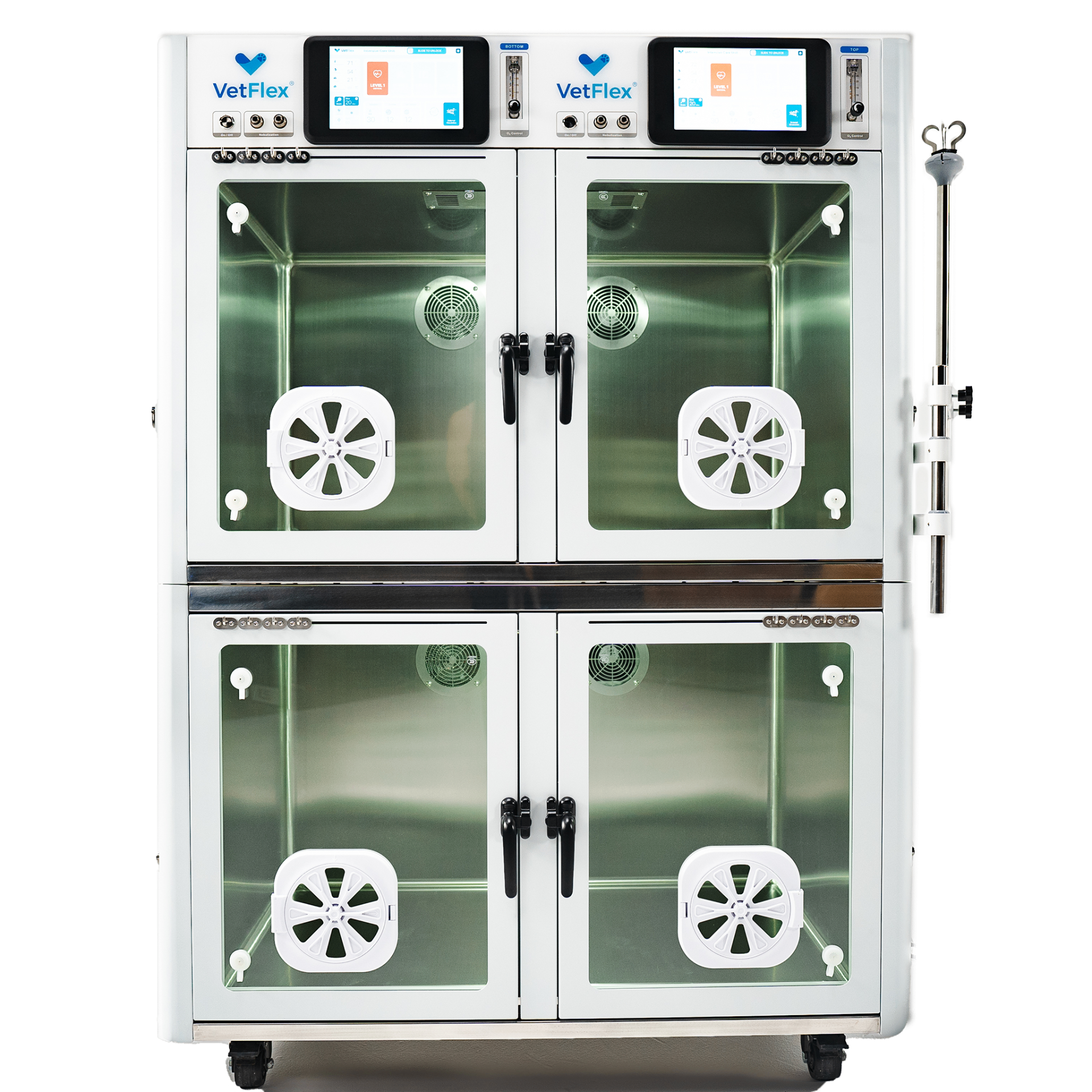
Most clinics selecting an oxygen cage are evaluating more than just oxygen delivery. The best systems combine precise environmental control, real time monitoring, and low maintenance operation. The challenge is separating genuine clinical value from marketing claims.
This guide is designed to help veterinary clinics evaluate oxygen cage systems based on real world clinical requirements and operational considerations.
Why Clinics Are Reevaluating
Inconsistent oxygen levels in basic enclosures without monitoring
Lack of temperature control beyond simple heating
No real time CO₂ or O₂ monitoring on entry level systems
High ongoing consumable costs with soda lime based systems
Limited scalability when practice volume grows
Noise levels that increase patient stress during recovery
What to Consider
Oxygen Delivery Method
How does the system manage oxygen concentration? Active monitoring and closed loop control provide more consistent levels than passive flow systems.
CO₂ Management
Does the system actively remove CO₂? Soda lime systems require ongoing consumable replacement. Electronic ventilation eliminates this entirely.
Environmental Controls
Evaluate temperature range, humidity management, and lighting options. Advanced systems offer both heating and cooling with precise control.
Monitoring and Alerts
Real time display of O₂ and CO₂ levels with automated alerts is critical for patient safety. Basic systems often lack these capabilities.
Build Quality and Durability
Stainless steel construction, quality seals, and medical grade components determine long term reliability and infection control.
Direct Comparison
High volume clinics often prioritize systems that reduce ongoing maintenance and consumable dependency.
Common Buying Mistakes
Evaluating oxygen delivery without considering CO₂
Oxygen enrichment alone is not sufficient. Without active CO₂ removal, dangerous levels can accumulate in sealed enclosures.
Choosing the cheapest option without calculating ongoing costs
Basic enclosures with soda lime can cost $15,000+ more over five years than advanced systems with no consumables (estimated).
Ignoring noise levels
ICU patients are critically ill. Systems operating above 40 dB can measurably increase patient stress and delay recovery.
Not considering future growth
Fixed configuration systems require full replacement when practice volume increases. Modular designs protect your investment.
When This Makes Sense
Clinics adding oxygen therapy to their critical care capability
Emergency hospitals requiring reliable, monitored oxygen delivery
Practices replacing aging or underperforming ICU equipment
Multi unit environments requiring consistent performance across cages
Clinics evaluating total cost of ownership across a five year period
Common Use Cases
Critical Care Recovery
Post surgical patients requiring precise oxygen delivery, temperature control, and continuous monitoring.
Emergency Medicine
Respiratory distress, trauma stabilization, and overnight monitoring in busy emergency departments.
Specialty Referral
Advanced cases requiring multi parameter environmental control and real time patient status visibility.
Frequently Asked Questions
Next Steps
View Products
Compare models and options
Download Specifications
Get detailed spec sheets
Request Pricing
Get a quote for your clinic
